Rome, Rulers and Respect: The Historical Context of Romans 13
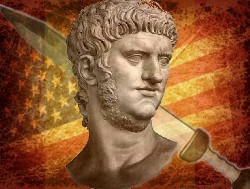
First and second century Roman historians provide a window through which to see the context of the Roman Christians in the time surrounding Paul’s letter to them. These historians’ accounts of the life and times in Rome are second-hand. When Paul wrote Romans, historians Suetonius and Dio Cassius had not yet been born, and Tacitus was two or three years old. Of these three, Tacitus, who was a close friend of Pliny the Younger, lived closest to the time of the events surrounding the book of Romans, and his accounting of that time period is the most detailed. Tacitus wrote, “I do but relate what I have heard and what our fathers have recorded.” The works of Suetonius (Lives of the Twelve Caesars) and Dio (Roman History) both corroborate and complement that of Tacitus (The Annals).

While it is difficult to pinpoint the beginning of Christianity in Rome, it is known that “visitors from Rome” were at Pentecost (Acts 2:10), Romans were converted to Christianity before Paul’s conversion (Rom. 16:7), Christians (namely, Aquila and Priscilla) lived in Rome during the reign of Claudius (Acts 18:2), and reports of the faith of Christians in Rome had already spread “in all the world” by the time Paul wrote to them (Rom. 1:8). These factors make the presence of Christianity in Rome likely from the mid to late 30s on into the reign of Claudius. The year AD 47 was about ten years before Paul wrote Romans and ten-plus years after his conversion. It is the year in which the following narrative begins.

The reign of Claudius and the rise of Nero

When Claudius was in the seventh year of his reign over the Roman Empire, his wife, Messalina, was at the height of her power. Many murders were committed at her bidding, and she forced others to commit suicide—sometimes only to quell her jealousy. As Messalina’s hate increased against Claudius’ niece, Agrippina, she was overcome with desire for another man and began an adulterous relationship with him. About a year later, when Claudius was away at the harbor city of Ostia, Messalina married the man with whom she was having an affair.
Discussion

Refund of union dues

Who knew?
Under the 1988 Supreme Court decision Communications Workers of America v. Beck every member of a union is entitled to a full refund of their dues that are not directly used for representing them.
http://www.unionrefund.org/index.asp: UnionRefund.org offers union members a quick and easy way to get a refund for dues from their union that qualify under Beck.
What I expect from UnionRefund.org

Discussion

The latest 'trendy' way to get high

Bath salts. Not kidding.
One of the most recent designer drugs to hit the streets – bath salts – has become trendy among users for many reasons: the perception of innocence, easy accessibility and relative inexpensiveness. But emergency medicine experts at the University of Alabama at Birmingham warn that these synthetic drugs are deadly.

Discussion

'No right to resist' ruling- headache for Mitch Daniels?

I received a blurb about this ruling in my email http://www.hslda.org/hs/state/in/201105180.asp: from HSLDA -
On Thursday, May 12, the Indiana Supreme Court held in Barnes v. State that an individual has no right to reasonably resist by force the unlawful entry into his home by a police officer. Under this opinion, the court overturned an ancient common law right to resist unlawful entry as well as Indiana case law upholding this right as recently as 1985.

Discussion

Christians and High Culture, Again

NickImageRead Part 1, Part 2, Part 3, Part 4, Part 5, and Part 6.

As Matthew Arnold envisioned it, high culture is the effort to “know the best that has been thought and said in the world” (Culture and Anarchy). It consists of those products of civilization that are deliberately meant to preserve, shape, and propagate human ideals and mores. It is encountered in libraries, academies, museums, and concert halls. It includes philosophy (broadly defined), the humanities, belles-lettres, music, the visual arts, and the performing arts. High culture can be contrasted with traditional or folk cultures as well as with popular or mass culture.

Each major civilization has produced its own high culture. Typically, high cultures have centered upon worship—not surprisingly, since every culture is the incarnation of a religion. From this center, however, each culture has gone on to examine the enduring aspects of human life: birth and death, comedy and tragedy, love and marriage and childbearing, hearth, home, valor and friendship, among others. They also explore answers to the perennial questions such as the nature of existence, truth, freedom, justice, duty, goodness, and beauty.

Christian leaders have been ambivalent in their opinion of high culture. Saul of Tarsus imbibed deeply from the high cultures of his day, but after his conversion he refused to rely upon cultural sophistication as a strategy for advancing the gospel. Even then, however, he clearly employed his cultural skills in the composition of his epistles. Tertullian, rejecting philosophy as only a trained rhetor could, asked “What has Jerusalem to do with Athens?” Others, such as Clement of Alexandria, followed by his pupil Origen, virtually subordinated Christian doctrine to the major philosophies of their day.

This ambivalence has a reason. On the one hand, the content of the various high cultures has often militated against Christian perspectives. On the other hand, the articulation of Christian perspectives seems to require mastery of the very disciplines that are perpetuated within high culture. The utterly unlettered or completely bumptious have only rarely made much of a contribution to Christian thought or sensibility.

Discussion