A Tribute to Dr. John M. Perkins
Image
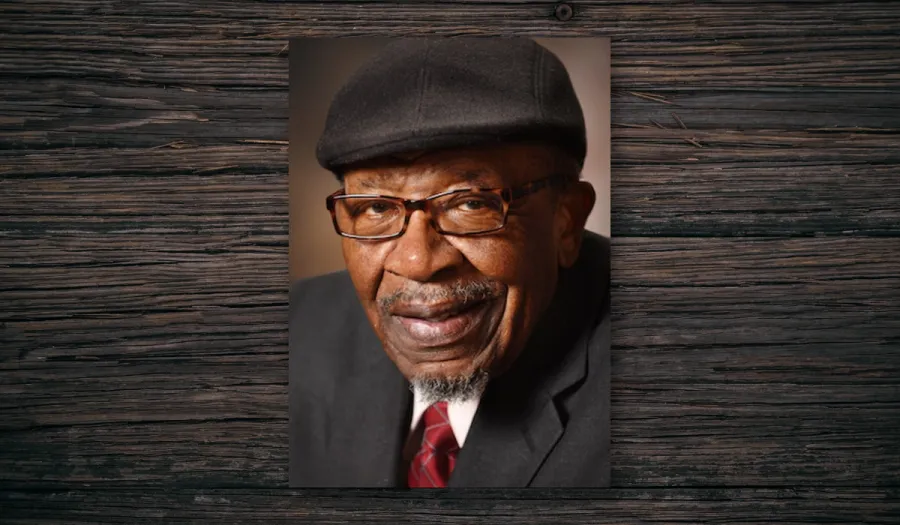
The passing of John M. Perkins last Friday marked the loss of a man who not only shaped me from a distance but whom I also had the privilege of meeting a few times over the years. He was a civil rights activist, a preacher, a community developer, an evangelist, and a discipler and developer of Christian leaders, among many other things. Historian and Theologian Charles Marsh from the University of Virginia has called him the most influential African-American leader since Martin Luther King.
As I’ve reflected on his life and influence, I find myself returning to seven things I learned from him. Lessons that didn’t just inform my thinking but continue to shape how I live and follow Jesus.
1. A Life Anchored in Christ and Scripture
My introduction to Perkins came through his book, “With Justice for All,” and what struck me immediately was that his life was anchored in Christ and governed by Scripture. His ministry to the poor, his work in racial justice and reconciliation, and his commitment to community development were not reactions to or accommodations of the prevailing cultural stream. All of them were responses to the Word of God.
He didn’t separate evangelism from justice, or theology from practice. The gospel was not just something he preached, but something he lived.
He also had a rare ability to challenge Christians on both the left and the right, calling each back to a more fully biblical way of reading Scripture and living it out. He refused to let either side settle into their particular echo chambers. Instead, he pressed toward the whole counsel of God—toward a faith that held together justice, reconciliation, personal responsibility, and gospel proclamation. Because of that, believers across the spectrum were deeply moved by his words, his books, and his lifelong commitment to Christ and the poor.
2. The Gospel Is the Only Path to True Racial Unity
Perkins approached racial justice and reconciliation through a biblical lens that is becoming increasingly rare today. He began with creation: that every person is made in the image of God, that we are “One Blood.” From there, he acknowledged the fall, including the real and painful division caused by sin, not only as a personal reality but as something he experienced in its systemic and racialized forms. But he refused to end the story there. He pointed to redemption in Christ that breaks down every wall of division.
For Perkins, reconciliation was not ultimately achieved through social theory or political alignment, but through the cross of Christ. That didn’t make him naïve about injustice. It made him hopeful about what God could do.
That framework has stayed with me. It reminds me that if we start in the wrong place, we often end in the wrong place. But if we begin with God’s design and move through the full story of Scripture, we find a path that leads not just to awareness, but to unity.
3. Vulnerability Is a Mark of True Leadership
Another thing that marked Perkins’ life was his honesty. He did not present himself as a flawless leader or a finished product. He shared his failures. He talked about his struggles. That kind of vulnerability is rare, especially in leadership.
But it made his life credible. It reminded me that following Christ is not about image management. It’s about faithfulness. It gave me a deeper appreciation for what it means to walk with humility, to admit when we’re wrong, and to trust God to work even through our failures.
4. The Transformative Power of Christian Community Development
Perkins’ vision for Christian Community Development—relocation, reconciliation, and redistribution—has stood the test of time because it is rooted in both Scripture and lived experience. He didn’t believe in temporary relief as a long-term solution. He believed in transformation.
As he wrote, “But the greater need is for development—to break the cycle of poverty, so that today’s receivers become tomorrow’s givers.” That line captures so much of his heart. It’s about dignity. It’s about empowerment. It’s about seeing people not as problems to be solved but as image-bearers to be equipped.
But one aspect of this vision that personally impacted me, especially in my early days of ministry, was his emphasis on relocation. Perkins didn’t believe in doing ministry from a distance. He believed in moving into the community of need. Living there. Becoming part of it. That challenged me in a very real way as I moved into our drug-infested, impoverished neighborhood 34 years ago. Early on, I was surrounded by many who were doing ministry to the poor in our community but not with them. There was often a distance—geographical, relational, and sometimes even cultural. And because of that distance, understanding was often shallow, shaped more by assumptions and stereotypes (often racial) than by real relationships. Perkins’ call to relocate cut through that and became a model to follow.
Moving into a community of need means their struggles are no longer abstract. They become personal. Their challenges become your challenges. Their needs become your needs. You begin to see people not as projects, but as neighbors. That shift changed how I understood ministry. It made it more costly. But also more real, more faithful, and more transformative. And that vision requires more than programs—it requires presence.
5. Redistribution, Redeemed
One of the most compelling things Perkins did was take a word that often carries heavy ideological weight, redistribution, and redefine it through a biblical lens.
In most contexts, redistribution is associated with socialist and communist forced transfer of wealth, often leading to dependency. But Perkins reframed it entirely.
He wrote:
“The third is Redistribution. Christ calls us to share with those in need. This calls for redistributing more than our goods. It means sharing our skills, our time, our energy, and our gospel in ways that empower people to break out of the cycle of poverty and assume responsibility for their own needs… The goal of redistribution is not absolute equality, but a more equitable distribution of resources.”
And he clarified further:
“Now, usually when I mention redistribution, people think that I’m taking all the money from the rich and giving it to the poor. That wouldn’t help a bit! If today you took in the money from the rich and gave it to the poor, the rich would have it back within a few days.”
This was not redistribution through coercion. It was redistribution through relationship, discipleship, and shared responsibility.
He drove it even deeper when he wrote:
“The kind of redistribution we need must go far beyond a dependency-creating welfare system… Our redistribution must involve us—our time, our energy, our gifts, and our skills. If we are sharing ourselves, sharing our money will follow naturally.”
That redefinition changed how I think. It showed me that biblical justice is not about government control and social engineering. Rather, it’s about love expressed through sacrifice, presence, and empowerment.
It’s about helping people rise, not keeping them dependent.
6. Justice, Responsibility, and the Structures that Sustain Life
Perkins had a rare ability to hold together truths that are often separated—compassion and responsibility, generosity and ownership, justice and economic wisdom.
He believed deeply in caring for the poor and in creating pathways to stability through work, ownership, and economic participation. He did not reject the free-market system. Instead, he saw its potential for redemption.
As he wrote:
“Despite its serious failures, I don’t want to throw out the free enterprise system. The freedom that many use to satisfy their greed can also be used to develop economic enterprises not based on greed… The free-enterprise system gives us the freedom to create businesses designed to serve, rather than exploit.”
He believed in building businesses within communities, creating ownership, and restoring dignity through work. He also emphasized the importance of the family, especially the indispensable role of fathers, in creating long-term stability.
Because of this balance, Perkins was respected across the body of Christ. He challenged conservative Christians to take justice and reconciliation more seriously. He challenged progressive Christians not to abandon the gospel nor forget about the importance of personal responsibility.
He didn’t fit into categories. And that’s exactly why his voice mattered.
7. Suffering Is Not Wasted
Perhaps the most personal lesson I’ve learned from Perkins is how to better understand suffering. Perkins endured brutal treatment at the hands of racist authorities during the civil rights era. He was arrested, beaten, and tortured by law enforcement officers in Mississippi. Men who saw him not as a fellow image bearer, but as a threat. He spoke openly about being severely beaten in jail, an experience that could have produced lifelong bitterness, but instead became a testimony to the power of forgiveness and love.
He also endured deep personal loss, including the deaths of two of his sons, and later in life, battled a painful form of cancer. These were not small trials. They were the kinds of suffering that shake a person to the core.
And yet, through all of it, he held onto Christ.
In Count It All Joy, he writes:
“When we are going through the test of suffering, the most important thing to us is getting past it. We want it to be done. We want to know how long we have to endure the pain. I’m learning the truth of what Isaiah said: ‘But those who hope (wait) in the Lord will renew their strength. They will soar on wings like eagles; they will run and not grow weary, they will walk and not be faint’ (Isa. 40:31). I’m waiting on Him and finding that He is giving me just enough strength to make it one more day. Waiting patiently for Him.”
That has become deeply personal to me.
Over the past two years, I’ve walked through suffering and affliction that I did not expect. As Perkins describes, my instinct was to get through it—to ask how long it would last, to look for the end. But in that place, God has been teaching me something different.
To wait.
To trust.
To fully depend on Him for daily strength.
Perkins continues:
“Not only are we strengthened to ready ourselves for the next storm, we produce fruit that shelters, nourishes and encourages others. I believe that’s what the apostle Paul had in mind when he said, ‘I want to know Christ—yes, to know the power of His resurrection and participation in His sufferings, becoming like Him in His death.’” Can there be any higher purpose for suffering than to make us rich in Him and ready for eternity? I don’t think anything compares to knowing Him with a faith that is unshakable. He redeems our suffering. He makes much of our suffering—not only in our own lives, but in the lives of others who are watching and wondering if it is worth it to follow Him. In that place where you feel hollow and empty—like you have lost everything—something of self dies. And I believe that is often where God plants something new. A deeper calling. A clearer purpose. Our suffering sensitizes us to things we once could not see. We cannot unsee them. We cannot unhear them.”
For me, that has led to renewal.
After more than two decades of not writing music, something opened up. In the middle of suffering, through waiting on the Lord, through experiencing His presence in my affliction, I began writing again—worship songs, many of them laments drawn straight from the Psalms.
Songs about who God is. What He has done. And experiencing God presence as He walks with us in the valley. What felt like loss became overflow. That is part of what John Perkins has given me. It wasn’t just a framework for justice or community, but a way to walk through suffering with faith.
I’m grateful that I didn’t just read his words, but had the chance, even briefly, to encounter him—and to be part of the thousands of a movement of Christian Community Developers during my three decades of urban missionary work who are continuing the work he began. His life was consistent. His message was clear. And his faith was real.
And his legacy will endure—not just in books or organizations, but in the lives of those he shaped.
I count myself among them.
May we carry it forward.
Thanks for reading Sentiments and Soapboxes! This post is public so feel free to share it.
Sentiments and Soapboxes Posts
Reposted, with permission, from Sentiments and Soapboxes.
Joel Shaffer bio 2025
Joel Shaffer is a retired urban missionary of 30+ years who vocationally works in a specialized public school setting, helping educate middle school students with significant trauma and emotional impairments. This allows him to write more frequently, including his Substack blog.


I wanted to share this on Sharper Iron because John Perkins has fundamentalist roots. He was converted by a CEF missionary after his oldest child was led to Christ at a Good News Club. Eventually, Perkins and his family moved to Mendenhall, Mississippi as to become a missionary to the rural, impoverished town he grew up in, supported by GARBC and IFCA churches in California. He established Voice of Calvary Ministries, named after John MacArthur's father's (Jack MacArthur) radio ministry Voice of Calvary. In the 1960's, he was a regular feature in a Fundamentalist magazine created by a GARBC connected missionary, Fred Alexander called Freedom Now! that sought to "to apply the whole gospel to the racial dilemma in order to make Christ known to all people." Several of his own kids and other students that he discipled over the years ended up attending LABC (Los Angeles Baptist College, now Masters College) and helped integrate the college. In the early 1970s, he expanded his circles beyond Fundamentalism to what we would call neo-evangelicalism, as Fundamentalists at the time were increasingly becoming suspicious of his community development work that came alongside the evangelism and discipleship he was doing and thought he had compromised the gospel. If you want to watch a video about who he was and is, check this out. https://www.youtube.com/watch?v=scRpgoR_qyo


Randy Alcorn on Perkins…
While suffering in the jail, Perkins prayed, and later told how God miraculously helped him realize that the same love that kept Jesus on the cross was the love God had for the men who were beating him.Somehow, by a work of God’s Spirit, John felt pity and compassion for the very men who had tortured him. Then and there he forgave them. He felt the hatred he’d had for white people drain out of him. He would never be the same. And neither would anyone who came to know him.
Views expressed are always my own and not my employer's, my church's, my family's, my neighbors', or my pets'. The house plants have authorized me to speak for them, however, and they always agree with me.

I read one or two of his books years ago after you mentioned him Joel. One Blood in particular was helpful. I appreciate the recommendation.
Discussion