Christians: Yes, Let’s Vote Our Values
Image
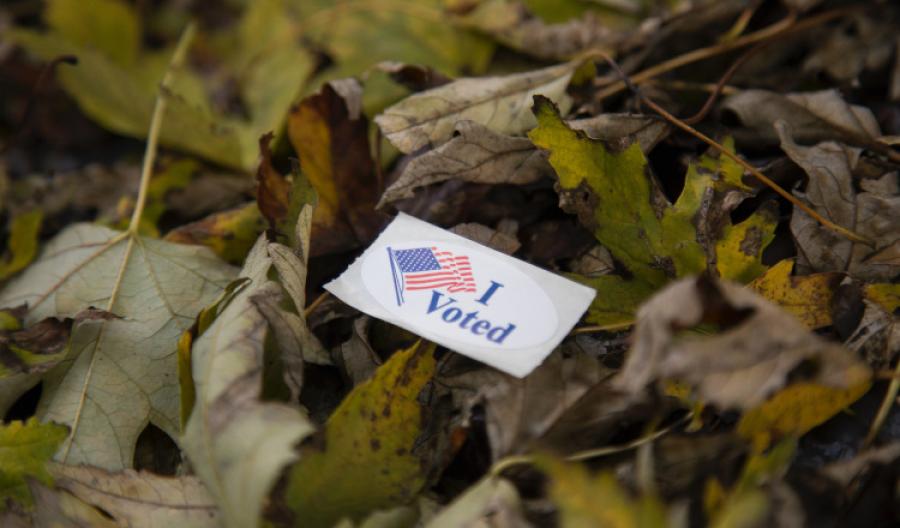
On the whole, I’ve written a lot less about the voting choices before us in this particular election cycle. From my point of view, it’s pretty much 2020 all over again, only with more clarity about the cultural and character factors.
More clarity? I’m sure many don’t see it that way. I’m not saying people are seeing more clearly. Subjectively, things seem more muddled than ever. Objectively, though, the character and positions of the candidates are even more clear than in 2020.
In this post, I’m reacting a bit to Kevin Schaal’s post over at P&D the other day, and many others like it (e.g., Jerry Newcombe’s similar list over at Christian Post). I don’t disagree with much in that post, but I would differ in emphasis.
First, I fully agree with this:
Some Christians do not live or vote by biblical values. And some Christians have not been taught how their faith should impact their voting choices.
Then we read, “These are the values that are at stake in this election.” The list that follows isn’t bad. I’m all for freedom of conscience, freedom of speech, sanctity of life, individual stewardship, biblical marriage, and just balances.
My own full list of values to vote for would include those things. There are some values at stake in this election, though, that are upstream of several of the above.
My own short, prioritized list of values to vote for would look more like this:
1. Vote for the gospel.
I’m not in favor of expansive and ambiguous uses of the term “the gospel.” The gospel is the good news that Jesus died for sinners and rose again. But this news has far-reaching implications. What do I mean by “vote for the gospel” here? Vote with the goal of helping churches and ministries retain or regain their understanding of what their focus should be in society: effectively adorning (Titus 2:10) and proclaiming the gospel.
The conflation of political tactics, policies, and candidates with Christian belief, practice, and mission is a serious problem.
I anticipate an objection: “We can’t vote for gospel clarity. It’s not on the candidates’ agendas.” I’m not sure it isn’t, indirectly, but let’s say that’s true. My recommendation, across the political spectrum, is to look at candidates’ stated agendas, remove everything they are not actually capable of achieving (because Congress would have to do it, or an amendment would be required, and every state would have to do it). Then look at what’s left and ask, “How much of this is just pandering?”
After that couple of filters, there might not be much agenda left!
Assuming something remains, it’s time to ask: If results are so important, what are some likely unintended results of the candidates’ agenda? What kind of backlash policies—or, more importantly, cultural shifts—might we see?
We really didn’t think overturning Roe would result in “abortion rights” becoming an issue that is not only actively supported by one party, but now passively supported by the other as well. But here we are.
Voting for results is a tricky thing, none of us being prophets.
But if we’re going to vote for results, surely increased clarity about what Christianity really is, and is not, should be a result we prioritize.
2. Vote for rule of law.
We live in a system of governance that, by design of its founders, has law at its center. When the colonies decided to part from the authority of England, they created a document with representative leaders as signers.
Later, they experimented with the Articles of Confederation and insisted on a ratification process. Why? Because of the conviction that the best way to govern a society is for the governed to create law that then has authority over those who made it.
Eventually, the Constitution was ratified in place of the Articles. Every office and branch of the U.S. government now derives its authority from that legal document. Lesser roles and requirements derive from the laws passed through the representative-legislators legal framework this Constitution authorizes.
In short, in a republic, the law is king, and all other rulers are its deputies.
If we’re going to vote for results, we should vote for candidates who seem likely to respect and nurture the rule of law.
3. Vote for truth in public discourse.
In the U.S., we have a long tradition of messy public discourse. For as long as I’ve been paying attention, that has included a fair amount of misrepresentation, exaggeration, and outright lying about political opponents.
And that’s not even including the candidates’ claims about themselves.
I’ve occasionally been accused of idealism, but I don’t expect “honesty in political rhetoric” to become a real thing.
That said, before 2021, did the U.S. ever have a sitting president try to hang on to power on the fantasy that the election had been stolen from him? I may have read that something similar has happened before in U.S. history, but at best, it’s been a very long time.
For Christians, does anything matter more than truth? We could make a case that several things are equally important. Of course, we’d insist that the God of all truth is more important than truth itself. It ultimately has little importance without its connection to Him.
That established, Christians, of all people, ought to treasure truth anywhere and everywhere it can be found. We ought to despise lies, useful or otherwise. We should loathe the kind of exaggeration, distortion, and sloppiness that ends up being little better than outright lying. We should be repulsed by the intellectual laziness that lumps dissimilar things together, overgeneralizes, and prefers increased vehemence over increased accuracy. That doesn’t promote truth either.
Surely we ought to be people who value truth more than tribe and who refuse to reflexively accept or reject claims based on what leader, pundit, or group they are coming from.
If we’re going to vote for results, we should prioritize whatever votes might help us, as a society, value truth more.
Final thoughts
I’d be first the admit that this short list of core values to vote for could be used to argue for whatever candidate one “likes.” That doesn’t make it objectively true that they are an equally good, or equally poor, fit for both candidates (or all the rest, down-ballot).
No, I’m not trying to tell people who to vote for (or “vote against,” if they look at it that way). But I do want to encourage us to have the gospel, the rule of law, and truth on our minds as we make these difficult choices. I want to encourage us also think in terms of our culture as a whole, not just the slice that is regulated by policy.
Important policy is at stake. Bigger things than policy are also at stake.
Aaron Blumer 2016 Bio
Aaron Blumer is a Michigan native and graduate of Bob Jones University and Central Baptist Theological Seminary (Plymouth, MN). He and his family live in small-town western Wisconsin, not far from where he pastored for thirteen years. In his full time job, he is content manager for a law-enforcement digital library service. (Views expressed are the author's own and not his employer's, church's, etc.)


They are only required to have everything completed by January 6th.
I seem to recall years where California didn't bother to count it's absentee votes (deemed unnecessary as not sufficient to change result). This was when absentees were mainly military, prior to the absentee push.
So when you say, "required to have everything completed," are they able to not count for reasons like above?

Trump culture…
Trump has brought a culture along with him in his rise to power. It includes placing a low value on truth, a highly selective regard for the rule of law, a lot of muddling of faith and politics, an emphasis on victimhood/grievance politics, and several other problems I could list.
Trump brought to the GOP what the progressives brought to the Democratic party a very long time ago in every single one of those areas you just listed. He played the "beat you at your own game" card well. Now he can go on to govern in what will likely be a very similar fashion as he did during his first term, driving policies which were, almost entirely, big wins for those who believe in the Constitution as the rule of law and who believe firmly that classic liberalism is far superior to what America's progressives have been pushing.
Ashamed of Jesus! of that Friend On whom for heaven my hopes depend! It must not be! be this my shame, That I no more revere His name. -Joseph Grigg (1720-1768)

JNoel,
"big wins for those who believe in the Constitution"
Except for the $7.8 to $8.4 Trillion that Trump added to the national debt. There used to be a time when Conservatives thought the national debt and government spending should go down, not up. Trump claimed he would pay down the national debt in 8 years (https://thehill.com/blogs/ballot-box/presidential-races/275003-trump-i-…). Regardless of pointing fingers and saying Obama or some other progressive was worse, this is just something that is an issue irrespective of anyone else.
Some of this big government spend, contributed to inflation. When Trump spent $2T on the CAREs project (Treasury printing $2T of money and sending it to everyone in the US), is pretty much macroeconomics 101 on creating inflation.
dgszweda,
I did say "almost entirely." ;)
Economics - financial economics, specifically, is a very complex subject. I am no economist, but I know that many have been saying since the end of the Reagan administration that America was going to collapse due to the national debt. And even with Clinton's budget surplus, the National Debt was still high - and it always will be, as most of it is publicly held debt. The national debt isn't the most important thing. Far more important is our financial standing in the world, and, for that, we're still in better shape than almost every other developed nation.
Ashamed of Jesus! of that Friend On whom for heaven my hopes depend! It must not be! be this my shame, That I no more revere His name. -Joseph Grigg (1720-1768)
JNoel,
I wasn't making a point on whether the world will collapse or not. Classic liberalism would be against a hefty national debt. And conservatives were ardently opposed to increases in the national debt. Unfortunately Trump's practices and even those Republican presidents before him have increasingly merged with the lefts approach to the debt. Debt is not bad, but the significant increase should be alarming to most people.
The economy was top of mind for most voters this election cycle, but it was missed that Trump's policies contributed in varying degrees (depending on your monetary viewpoint) to the increase inflation. When government prints money and injects it into an economy (especially one frozen by COVID lockdowns) it creates inflation. 2 Trillion was the largest injection of money from the US government into citizen's pocketbooks in history. I am no fan of Biden at all, but many miss the fact that Biden accomplished a "soft landing" from a high inflation that he inherited. That is also pretty much unprecedented, and one that most countries were not able to achieve today. Not all of it was related to Biden himself. A strong Central Bank helps the US out significantly.
dgszweda,
Of course - and, again, that's one reason why I said "almost." Our current gov't debt situation is far too large. Some debt is necesary and even healthy, but we're far beyond healthy.
As America is right now, it is impossible for any President to zero out the national debt, or even reduce it significantly. Even keeping it static is likely impossible, and there are a lot of factors that tie into that, not the least of which is the aging/retiring boomer "takers" and the very small Gen X "investers." For every 10 boomers that move from investing into the economy (toward retirement) into taking back out of the economy while retired, there's only 1 or 2 Gen Xers in the heavy investing years of their lives putting money into the economy.
No candidate can run on any policy right now that will drive down the national debt and expect to win; however, in about twenty years, when the dominant retiree "takers" are the very small Gen X, and the boomers have all but passed on, and the larger-than-X Gen Y is in the investing period in their lives, the entire outlook for American finances and the national debt at least has the potential of being completely different. Of course, that assumes China, Russia, Iran, and nK haven't thrown us all into WWIII. If that happens, none of the current conversations about the National Debt will matter. :)
Ashamed of Jesus! of that Friend On whom for heaven my hopes depend! It must not be! be this my shame, That I no more revere His name. -Joseph Grigg (1720-1768)

The thing that bothers me about mail in ballots is that there are cases (e.g. Nevada) where election authorities are "bending" on whether the postmark must be there and legible, and there are also questions on how well signatures are being verified.
Moreover, when you allow election authorities a week or so to count ballots, that is a wide open door to vote fraud. Things you could never do with a vote scanner at the polls are straightforward when you've got ballots sitting around for a few weeks. "Let's fudge the postmark to make it look like this one was mailed on time", "let's argue around the reality that the signature doesn't match the one on file at all", etc..
Agreed to a great extent on the national deficit and debt, though. We need a serious look at which programs are necessary at all, which goals the government should and should not have, and how we ought to achieve those goals.
One correction, though; Biden did not inherit high inflation, but rather helped create it. It was 1.2%in 2020 and 3.4% in 2021, but passing of the $1.9 trillion "American Rescue Act" of 2021 resulted in a 8% inflation rate in 2022. That is all on Biden. Thankfully a return of the House to GOP hands slowed things a little in 2023, easing inflationary pressures, along with tighter money by the Fed.
Aspiring to be a stick in the mud.
Well, he still has 4 more years to finish what he begun - but I don't think it's fair to say he should still be able to eliminate it because he didn't have 8 straight years, and there was also a pandemic.
I say all of that a bit tongue-in-cheek. There was exactly zero chance of eliminating the national debt in 8 years, even without the pandemic. There is only one way to take that statement - the same way you have to take almost everything Trump says. It's part of his brand. And, no - I don't like it. Claims like that are nonsensical. No president will ever eliminate the national debt - we will always have one, and it's okay that we do - it's healthy to have some debt.
Ashamed of Jesus! of that Friend On whom for heaven my hopes depend! It must not be! be this my shame, That I no more revere His name. -Joseph Grigg (1720-1768)
Listen, both parties are terrible at the deficit. The Republicans used to have controlling spending and either stabilizing or reducing the debt as a platform priority. But that is no longer the case. The Republicans are just as bad. Given a lot of the tax cuts that Trump is proposing without an compensating reduction in government spending is going to create an even bigger problem.
I don't disagree with Trump's generalized approach, but his chaos approach may end up causing problems. I am all for reduction in government spending, but a wholesale reduction of government spending right away is going to create large problems across the economy. I remember the days of watching the national debt go down under Clinton (again not a fan of Clinton nor was it solely related to him). IF we can just hold hte debt steady that would be a huge win. Nobody has to eliminate it.
Is, of course, stop digging. Personally, if Trump were to halve the deficit without destroying essential government services--that means real public goods like national defense and border security, among a few other things--I would be ecstatic. With an official national debt of over thirty trillion bucks (GAAP debt is over $100 trillion), pigs will fly before we get a serious dent made in that.
And regarding Trump's chances at doing this, he's going to have to curb his spending instincts. It is not for no reason that his businesses have had several bankruptcies.
And really, on both sides, real progress requires the guts to say "I know you want to continue program X as it is today, but the actuaries say it's unsustainable. Let's figure out a way to get a reasonable amount of what we have without bankrupting ourselves."
Aspiring to be a stick in the mud.
The voting public seems to care little about the national debt. (Which is a pity.) That being the case, Republicans are facing an uphill battle if they make that a priority. I think they've realized that if nobody cares, they may as well play the Democrats game of ignoring the debt and promising programs that voters like. It may be the only way to get elected. You can't lower the debt if Democrats win all the elections. When the national debt is clearly manifesting problems, voters may get behind a reduction program and Republicans are the ones most likely to provide it. This is more pragmatic than principled but campaigning on principles that cost you elections consigns you to unending minority status. Ultimately, the only solution for sound fiscal policies is to change the mindset of the electorate. I don't see this happening any time soon.
G. N. Barkman

Just for reference here, and I know the situations are a bit different, I've lived in Taiwan and Indonesia (and China, although that doesn't count for obvious reasons), both of which are democratic nations who elect their head of state. One of these is a developed nation, one is a developing nation. And I've been present through several elections. In both cases, it's normal for election results to be announced within hours of polls closing. Of course official results can take longer, but those never seem to change anything.
I realize there are governance factors in play, of course, but it doesn't change the fact that it really shouldn't have to take so long.
AndrewK,
The AP called the race for Trump at 2:30am EST. Polling closed in California at 8pm PST (or 11pm EST). The race was called 3.5 hours after the last poll was closed. I think that was fairly quick. Again, the US has an entirely different election process that does not run through a timetable that calls a president quickly. Yes, it will take longer than 3.5 hours to pull all final votes, but in the end it doesn't change anything. I don't see how making it any faster will really change anything at the end of the day. Unless there are legal battles or really close races, elections are called within a few hours.
All,
I agree that it would not make much sense to run on debt reduction, but it would make sense to run on fiscal responsibility. Trump fails to grasp basic economic functions, like how tarifs work. But if he is going to spend more than he should seek to cut from other places. If he is going to have wide swaths of tax cuts, than he needs to look to cut costs. I am all for tax cuts and cutting costs, but they need to be tied together. I hope this administration does this to a degree. Just balancing costs with expenses, will in and of itself reduce the federal debt.
Probably the biggest reason that we are having troubles with debts and such is that too many of our Congressmen have learned the wrong thing from "Boss Tweed" and "Tammany Hall"; that the purpose of government is to confer benefits, not merely to provide public goods (goods for which the private sector does not tend to provide, e.g. national defense). Since our poli-critters get re-elected on the basis of bringing home the bacon, that's what they do--and the temptation for a somewhat vain person to get his name on the new government project or building is a huge motivator as well.
Aspiring to be a stick in the mud.
My take on why we have such delays is that many states have abandoned the notion that voters need to participate according to the rules--get registered to vote, show up for either early/absentee or voting day voting, show ID, etc..
So we keep making more and more exceptions to get a larger portion of electors to participate, ignoring the fact that quite frankly, some people probably should not vote.
That's controversial, yes, but do we really want people who never get a drivers' license or other ID--people who cannot get a good job, get a mortgage, pass background checks, fly commercial, get good medical care, etc..--to be making these multitrillion dollar decisions, at least in part?
Same basic thing for people who cannot be bothered to show up on time; should we be telling them, in effect, that this gap in basic adult behavior is OK, or should we tell them "show up to vote at the designated times, or you don't get to vote"?
It's not the only thing going on in certain communities, but I'd argue that our approach to voting is helping to infantilize a lot of people by making basic adult behavior optional, and in doing so, it's causing a huge amount of strife in our country as we wait weeks to months to know the results of an election.
Aspiring to be a stick in the mud.
That's controversial, yes, but do we really want people who never get a drivers' license or other ID--people who cannot get a good job, get a mortgage, pass background checks, fly commercial, get good medical care, etc..--to be making these multitrillion dollar decisions, at least in part?
Bert, you've made a point of presenting some of Rajesh's statements about music as being racist, but this paragraph here of yours seems just reeking of racism. It's usually the minority communities who've been unable to get good jobs, who've been prevented from getting mortgages, who've been targeted with harsher penalties for crimes and who can't get good medical care. Are you saying these minority communities should also be restricted in voting?
"That's controversial, yes, but do we really want people who never get a drivers' license or other ID--people who cannot get a good job, get a mortgage, pass background checks, fly commercial, get good medical care, etc..--to be making these multitrillion dollar decisions, at least in part?"
That is not a choice we make. Voting is a Constitutional right. Your thinking is the very same thinking that we rail against when restrictions are put on guns, religion, vaccine.... Every citizen has a right to vote, independent on an arbitrary view of the value that they have in society or whether we feel they are competent to make a decision that we feel shouldn't be given to them.
There are plenty of people who don't have a drivers license or state id. Where on earth are we required to have a driver's license and how does a driver's license standard indicate whether someone should or shouldn't vote. My brother-in-law is a disabled vet who cannot get a good job. Does the fact that he sacrificed his ability for our country delineate him on whether he should vote or not? I don't get your comment at all.
So your solution is to setup some level of arbitrary standards on who should or shouldn't be qualified to vote? Some of your verbage is eerily close to the same verbage used to argue why blacks or women shouldn't vote.
David, if I want to point to a racist/sexist assumption, I'm going to point to your assumption that large numbers of minorities (etc.) are incapable of showing up on time or getting a basic ID. That's a lot closer to the Jim Crow arguments about capability than mine!
Let's be honest here; getting a state ID, or reading one's watch, can be done by someone with Down's. We are not exactly talking about the poll tests done in the South that were written in Mandarin, or poll taxes that were unpayable by sharecroppers. We're talking about finding one's birth certificate and walking down to the DMV (or the Post Office if you want a passport) to get an ID, and we're talking about reading the clocks that one finds in plain view in most buildings. You don't even need to pass a driver's test.
Really, my point is simply that our voting system is undermining basic adult behaviors, and the end result is that by eliminating requirements for timeliness and ID verification, we're creating huge squabbles about our elections while infantilizing our poorer populations.
You want something with racist overtones, there you go.
Aspiring to be a stick in the mud.
RI has Voter ID. We are a VERY blue state. I honestly have no idea how that law got passed in RI, because the vast majority of states that have NO Voter ID laws are very blue. HI, WA, OR, CA, NV, NM, MN, IL, MD, PA, NJ, NY, MA, VT, and ME have no ID laws. It is insane to not require something as basic as a voter ID. I have no idea how states justify not requiring it, and I have no idea why the Federal Government hasn't passed some law demanding states to do the same. But I think we all know the answer, as what do all of those states have in common? They're either very blue or they're battlegrounds (NV/PA). Only progressive/leftists complain about voter ID requirements.
BREAK BREAK
Voting is a constitutional right for all - because of amendments. Amendments are a good thing; they allow for societal evolution to make rational adjustments. But not all adjustments have been rational, and some adjustments probably should be reconsidered.
The 26th amendment is an excellent example. I don't even think most 21 year olds should be voting. I do not know what I think is the best answer as to when a person should be allowed to vote; age? Other factors? These aren't easy questions, but no one can convince me right now that allowing all 18 year olders to vote was a good Amendment. I know; that decision came during the Vietnam war when it seemed to make sense to allow draftees to vote for their potential CINC. But even consider the year and how rampant drug use was in that era and consider if it made sense to allow early 70's 18-year-olders to vote. The 26th should be repealed.
I also do not think universal suffrage best, but I can offer no alternatives - because it would be impossible to pass any laws that would narrow suffrage that would not be partisan. Therefore, I think universal suffrage is the only possible answer. The only thing that is negotiable, IMO, is the when. Definitely not 18.
Ashamed of Jesus! of that Friend On whom for heaven my hopes depend! It must not be! be this my shame, That I no more revere His name. -Joseph Grigg (1720-1768)
Per Jason's comment, I cannot totally agree with raising the voting age--for starters, it would go over like a lead balloon politically--but what it does remind me of is that voters can change as they are educated. For example, contrary to just about everybody's predictions, Trump's share of Latino voters skyrocketed. They decided that Trump's platform fit their needs better than Harris'. Demography is not destiny.
And going back to the original topic, that's part of voting, and speaking, our values. Regarding immigration, for example, I don't see a big reason that we should allow illegal immigrant criminals (the serious violent felon/drug deal kind) to stay in the country if we can avoid it. We have plenty of home grown ones already, no? And I'd guess that, statements about the maturity of the mind getting more complete by age 25 and all that aside, kids of 18 can comprehend.
Aspiring to be a stick in the mud.
Philosophically speaking, I like the concept of only allowing those who have shown themselves to be responsible citizens the right to vote. Most Americans, at 18, have never done that. I have no idea what a reasonable responsibility test would look like; how to implement my philosophy is something for others to figure out.
Ashamed of Jesus! of that Friend On whom for heaven my hopes depend! It must not be! be this my shame, That I no more revere His name. -Joseph Grigg (1720-1768)



>>Philosophically speaking, I like the concept of only allowing those who have shown themselves to be responsible citizens the right to vote. Most Americans, at 18, have never done that. I have no idea what a reasonable responsibility test would look like; how to implement my philosophy is something for others to figure out.<<
As a philosophy, I agree with that concept as well. Voting should really not be exercised by those who don’t care, or aren’t willing to educate themselves about what they are voting for or against. As you and others have noted, there would be issues with implementing that practically.
The classic science-fiction novel Starship Troopers which I read in my teens explored the idea of making full citizenship/voting rights dependent on military service. For even giving voice to that idea, Heinlein was accused of being fascist. (Clearly that accusation is hardly a new development in our country. It might be more common now, due to Trump, but the same thing was said of Nixon, Reagan, Bush, and non-political figures as well.) I do wish there were a way to have only responsible people vote, but, there really would be no way to judge that fairly.
Dave Barnhart
Interesting how that could be thought "fascism" when many countries in Asia (e.g., South Korea, Singapore, China) require at least some military service of all their citizens.
I'm not sure, but I wonder if the new definition of "fascism" is opposition to communism.
Russia, Israel, Switzerland (at least formerly), many of the NATO countries, and more require a degree of military service. The down side is that with rare exceptions, most of those subjected to it don't take it seriously, and hence you get a military that really isn't capable. I tried (and failed) to get into military academies when I was young, and one of the things hammered into me at that time was how much better it was in the services when the draft was ended.
But that said, it does speak to the reality that a good electorate in a republic like ours depends on the citizens/electors understanding the nature of the "res publica" as they go to vote.
Aspiring to be a stick in the mud.
Those who think that there isn't vote fraud going on need to watch what's going on in Pennsylvania, where election officials in four counties-three strongly Democratic--are counting ~110,000 ballots despite the state supreme court having ruled that they were inadmissible in an effort to get Bob Casey back into the Senate.
Aspiring to be a stick in the mud.
Meanwhile, California is STILL counting ballots. We are nearly 3 weeks out from the election.
It takes longer when you have to figure out how many to count twice.
Here is a post directly from the White House official page following the latest trend of ASMR videos. For those who don't know what ASMR is, here is the definition from the VOX website: ASMR is the term for the sensation people get when they watch stimulating videos or take part in other activities — usually ones that involve personal attention. Many people describe the feeling as “tingles” that run through the back of someone’s head and spine. Others say the feeling is deeply relaxing, and can even cause them to fall asleep.
If this is representative of the values that Christians voted for, I find that incredibly sad...and distinctly un-Christian.
Here is a post directly from the White House official page following the latest trend of ASMR videos. For those who don't know what ASMR is, here is the definition from the VOX website: ASMR is the term for the sensation people get when they watch stimulating videos or take part in other activities — usually ones that involve personal attention. Many people describe the feeling as “tingles” that run through the back of someone’s head and spine. Others say the feeling is deeply relaxing, and can even cause them to fall asleep.
If this is representative of the values that Christians voted for, I find that incredibly sad...and distinctly un-Christian.
Ken S, are you even aware of the terrible crimes that these people have committed? Are you aware that those being "rounded up" were rounded up because they had committed crimes in addition to being in the United States illegally? BTW, please keep posting. It is valuable for people to see how progressives view the world and thus vote accordingly.
I am so thankful that criminals are being taken off our streets and that the poor and minority communities will now be much safer. As a conservative, I do care about those communities. I also realize that these criminal aliens have had a much greater detrimental effect on those places than they have on middle and upper class neighborhoods. I am not willing to buy the middle upper class argument that we need cheaper labor at the expense of minority and lower class neighborhoods.
JD Miller, what I am aware of is that immigrants commit violent crimes at a lower rate than native-born citizens. I support deporting violent criminals. But what Trump proposed during his campaign and what is currently happening is not just deporting the violent immigrants (though I'm sure some of them have been included too). The "deporting violent criminals" line is a red herring. If you like the White House post then just say so. Don't hide behind the violent criminals line.
JD Miller, what I am aware of is that immigrants commit violent crimes at a lower rate than native-born citizens.
That may be true of immigrants, but there is a huge difference between the statistics involving legal immigrants and illegal aliens. I know of no elected republican that is opposed to legal immigration. I know of plenty of elected democrats that are in favor of illegal immigration.

The data on violent crime by illegal immigrants compared to legal immigrants and native born US citizens has been a source of controversy over the past several years. From Cato Institute's demographic studies of Texas (which has some of the most comprehensive statistic regarding violent crime and immigration) they allege that legal immigrants commit the least amount of violent crimes, then illegal immigrants, while native born US citizens commit the most violent crimes. The Center for Immigration Studies (CIS) found that the Cato study was flawed because it didn't use a certain updated data site, but then CIS's study to counter the Cato study was also found to be flawed because it periodically double-counted illegal immigrants There have been other studies done by academics that confirm Cato's research, even accounting for its initial error.
Often times, mainstream news media will undercount the number of violent crimes by illegal immigrants combining stats of both legal and illegal immigrants because it significantly drops immigrant crime way below native born violent crimes. But to be honest, the data isn't as clear about what is going on throughout the entire US. Alot of lies have been told to scare conservatives by their leaders and alot of lies have been told to progressives by their leaders keeping them in their state of ignorance and naivity as well.
By the way, I have no problem building a high wall and creating a real border. However, there are better solutions than creating all the chaos that would take place by sending everyone back (if that's what actually happens with this administration). I believe that extra taxing/fining those who came over illegally for 10 years as restitution for breaking the law is both just and loving. If you fined/taxed the 6.3 million families units that are here illegally for a decade at 3,000 a year, you could generate 180 Billion dollars (+9 billion) that it is estimated to pay for a wall. Sending non-violent illegal immigrants back, especially those who come from war ravaged countries will create even more crazy economic and social chaos than we've had, which can end up being unloving to everyone due to the social and economic instability it would cause due to the law of the unintended consequences. IMHO, you can show both compassion and justice (upholding the rule of law). You don't have to choose.
I agree Joel. I am also all for tougher border controls and removing certain illegal classes out of the country. But I am also in favor of a path to citizenship for those who are here, who are contributing. I would like to see a one time amnesty program. Immigrants are so incredibly powerful for our country. The vast majority work hard, they can contribute significantly to our tax base. They buy goods which create jobs for all Americans and they typically have more kids than native citizens which helps with programs such as Medicare and Social Security. Kicking them all does nothing. It returns us to a nation that is has a diminishing young population, loose millions of consumers, loose the taxes they do pay....
I love this idea:
By the way, I have no problem building a high wall and creating a real border. However, there are better solutions than creating all the chaos that would take place by sending everyone back (if that's what actually happens with this administration). I believe that extra taxing/fining those who came over illegally for 10 years as restitution for breaking the law is both just and loving. If you fined/taxed the 6.3 million families units that are here illegally for a decade at 3,000 a year, you could generate 180 Billion dollars (+9 billion) that it is estimated to pay for a wall. Sending non-violent illegal immigrants back, especially those who come from war ravaged countries will create even more crazy economic and social chaos than we've had, which can end up being unloving to everyone due to the social and economic instability it would cause due to the law of the unintended consequences. IMHO, you can show both compassion and justice (upholding the rule of law). You don't have to choose.
We can debate all day (and some do) about whether illegals have, outside of immigration offenses, higher crime rates than the rest of the nation. What I can say for sure, though, is that crimes committed by illegal immigrants wouldn't happen if they weren't here.
Well, they might occur in their native countries, but maybe those countries know their schtick better than we do and can deal with them better. Love immigrants--as an engineer I work with a ton of them--but U.S. citizens have the right to ask the courtesy of background checks, visas, health checks, and the like.
Aspiring to be a stick in the mud.
Bert nails it.
China has the right to deny me entrance if they choose, or put me under increases scrutiny as a foreigner.
No one debates that.
But for some reason, when it comes to the US, a lot of people suddenly don't believe in borders anymore, and our laws can be ignored.
But for some reason, when it comes to the US, a lot of people suddenly don't believe in borders anymore, and our laws can be ignored.
The phrase "Open Borders" means something different to people in America. Even the Biden administration claimed they weren't for open borders. They would use phrases such as "the border is closed to irregular migration." Only a small minority of far-left progressives, sprinkled in with some libertarians, desire the anarchy of a classic open border policy. However, because the border was so overrun, especially with so many folks claiming (legitimately or illegitimately) asylum, and because there was such an overrun system that could not properly vet asylum situations and because the laws take so long to process, bad policies and reactions such as "catch and release" orders given to border patrols (this is just one example of how messed up our system is in dealing with immigration) created a De Facto Open Border, IMHO.
Of course there are those on the far-right who believe that democrats such as the Biden administration and those in congress purposely created the border chaos as part of their nefarious plan to overrun the country with minorities as a plot to replace white people (replacement theory). Therefore they really secretly held to a classical open border belief, But the older I get, I see it more as progressive incompetence from holding to a more unconstrained worldview as Thomas Sowell so eloquently observed in A Conflict of Visions.
Discussion