Sanctification: A Process Or An Experience? Part 2
 By Dr. Dave Burggraff
Read Part 1. First appeared at SI on July 21, 2005. Original article and discussion thread.
The Distinctions between the Reformed and Dispensational Positions
Today there is seen a growing uneasiness over dispensationalists who seem to be moving toward a Reformed position on sanctification. To be sure, it should be noted that there is much agreement between the dispensational and the Reformed positions. Agreement would include the following: that the Holy Spirit plays an indispensable role in sanctification, that sanctification involves both sovereign grace and human responsibility, that sanctification must be progressive, and that the baptism of the Holy Spirit means the placing of people into the body of Christ—a divine blessing that is to be distinguished from the filling of the Holy Spirit, that the regenerated person has eternal security, that the believer cannot attain sinless perfection in this present life, and that such perfection will be reached only in the life to come. Both agree that sanctification is a process.
Nevertheless several significant differences remain. Basic areas of disagreement include the relationship between justification and sanctification, the relationship between divine sovereignty and human participation in the process of sanctification, and the question of whether the believer has one or two natures. In the responses by Hoekema and Walvoord to each others views, however, the most prominent area of disagreement seems to be on the issue of the believer’s nature(s). It is over this area where, in some circles, there is currently movement from/between the Augustinian-dispensational and Reformed positions.
It is not uncommon to hear dispensationalists express themselves in terms formerly considered strictly Reformed. Expressions such as God “cures our sinful nature,” or God “eradicates our sinfulness,” or “in sanctification the old nature is progressively being eradicated” are being used favorably by some dispensationalists—these were formerly expressions of the Reformed theologian, B. B. Warfield. It is also common to hear those of the Reformed perspective holding to variations from the traditional historic Reformed perspective, especially when it comes to the interpretation of Romans 7.

 Republished with permission (and unedited) from
 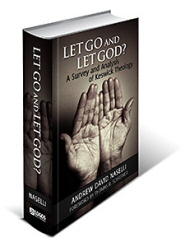 Dr. Andrew David Nasellli (a.k.a. Andy Naselli), has completed some excellent doctrinal and historical study in the area of sanctification. How do believers grow to be like their Lord? What should they expect the experience of growing in holiness to be like?
 Every believer experiences deteriorating attitudes toward God sometimes. Some believers are out of touch with their “inner man” and live with their heads in the spiritual sand. As a result, they may not recognize this tendency within themselves (and that is tragic). Denying reality is an old coping mechanism, but a dishonest one. Perceived or not, the attitude problem within us is real. Here are two issues related to these attitudes.
 Reprinted with permission from

Discussion