The Terrible, Swift Sword
One moment they said, “peace and safety,” but then came sudden destruction like a thief in the night. For Osama bin Laden and his entourage, calamity struck in the form of American helicopters and US Navy Seals. After a few moments of frenetic terror, bin Laden was dispatched into eternity.
The world has not mourned his slaying. Quite the opposite. When news of his death broke, crowds gathered spontaneously, breaking into impromptu celebration and song. A Philadelphia baseball game came to a halt as fans, and then players, burst into cheers and chants.
Why such jubilation? Why celebrate a human death? It would be easy to dismiss this elation—and some have—as a coarse expression of American triumphalism, as if America were the studio audience and bin Laden were an especially unpopular guest on the Jerry Springer show. A few Christian pundits have worried whether such jubilation is compatible with Christian love and the desire for reconciliation.
Those who experience such concerns should spend a few hours pondering the ferocity of Psalm 137 or reflecting upon the taunt against the king of Babylon in Ezekiel 28. They might even consider the ground of the encouragement that Paul offers in 2 Thessalonians 1:8-9. The sensibilities of these and similar Scriptures cannot be confined to some different dispensation. What they express is a legitimate aspect of the life of faith, and we deny or suppress these expressions to our detriment.
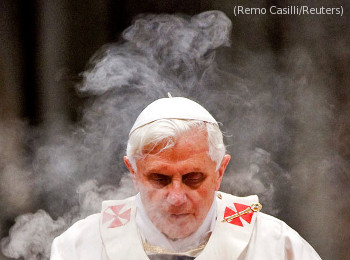 Shortly after he ascended the papal chair, Pope Benedict XVI declared that one of his goals was to re-Christianize a secular Europe. If anyone has had the know-how for the project, it is surely he. But it looks like it’s going to be a long haul. After chastising the American bishops for their irresponsible handling of sexual abuse cases among the clergy in 2008, he has to tackle the scandal here.
Discussion