Music in the Bible and the Contemporary Music Styles Debate (Part 4)
Image
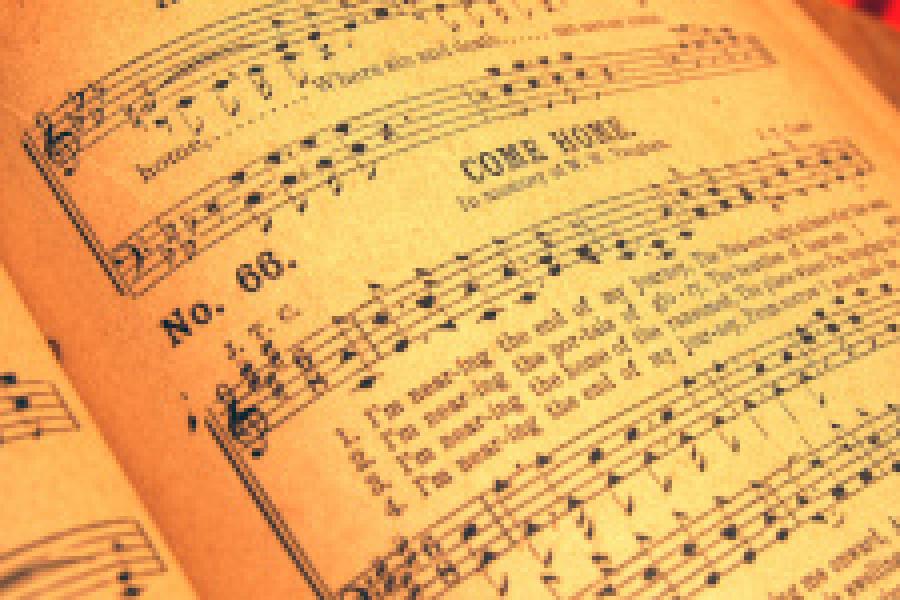
Gregg Strawbridge continues his series about contemporary music styles in the church.
Christianity, Culture and Music
The larger issue in the entire discussion of CM is Christ and culture. How are we to see the basic relationship between the people of God and cultures in the world? To put it in Biblical terms, what are the full implications of being “in the world but not of the world” (Joh 17) and doing all things to the glory of God (1Co 10:31). Moreover, where do the Biblical principles of accommodation function - “And to the Jews I became as a Jew … I have become all things to all men, that I may by all means save some.” (1Co 9:20-22)?
For my own commitments here, I believe that Christ will largely transform culture. The Biblical support for this Calvinistic view may even be drawn in several distinct categories:
Missiologically
We have both the imperative and prophetic forms of world discipleship which implies that Christ will transform culture to some extent (Mat 28:19-20 (11) & Psa 22:27).
Eschatologically
Christ’s second advent is sequenced by reigning at the right hand of God “until He has put all His enemies under His feet,” the last of which is death which is demonstrably overcome at the resurrection (1Co 15:25, 54-55). Hence those of His enemies which have cultural manifestations shall be affected in the present progressive reign of Christ.
Culturally
The music of the redeemed shall flow from all ethne, loosely stated, from all cultures. For example, Isaiah speaks the word of the Lord saying, “Sing to the Lord a new song, sing His praise from the end of the earth! (Isa 40:10). “Sing to the Lord a new song; sing to the Lord, all the earth” (Psa 96:1). Notice that “new songs” are being commanded from other nations.
The New Testament indicates that worship from other nations is a climactic hope in the drama of redemption. God desires for “the Gentiles to glorify God for His mercy; as it is written, ‘Therefore I will give praise to thee among the gentiles, and I will sing to Thy name’ and again he says… ‘praise the Lord all you gentiles, and let all the peoples praise Him’ ” (Rom 15:9-11). “And they sang a new song …Thou wast slain, and didst purchase for God with Thy blood men from every tribe and tongue and people and nation’ ” (Rev 5:9-10). Therefore, we are as much as told that the nations will use their music to glorify God.
Developmentally
Scripture itself recognizes change in cultural mediums of communication and allows for cultural differences and changes within time. Proof of this might be developed from observing the linguistic references throughout Scripture. “And they read from the book, from the law of God, translating to give the sense so that they understood the reading” (Neh 7:8, see also Mat 1:23, Mar 15:34).
Cultural diversity and change is factually depicted and assumed throughout the Old Testament and New Testament. Moreover, the revelation of the Messiah is brought through the medium of the Greco-Roman language and culture with Judaistic roots rather than the language Abraham, Moses, or David eras - remembering their were vast differences lingustically/culturally between even these patriarchs.
When this is coupled with the “sing a new song” prescriptions, linked to ethnic groups (Psa 96:1-2; Isa 42:10-11) and that redemption is intended for “every tribe and language and people and nation,” the ethnomusical implications are strong. The cultures of the world will and do in fact use their languages and musical expressions for praise! Hallelujah! - this is a universal word of praise.
Culture and the Heart-Language
If music changes interactively with culture, whatever the musical heart-language of people is, is the best for expression of heart-truth. As Chenowith and Bee say, “When a people develops its own hymns with both vernacular words and music, it is good evidence that Christianity has truly taken root” (p. 212). Like it or not, a country bumpkin, harmonically impoverished with the sounds of Nashville, will not sing “I love you” to his fiance in the style of John Dowland’s renaissance Lute songs (a sixteenth century court musician of Queen Elizabeth).
Adequate reflection on the issues here will prevent us from adding to Scripture our pseudo-absolutes. We will not be as quick to condemn the musical mediums of other cultures and subcultures by imposing an ethnocentric standard. Our North American culture certainly is not an authoritative standard by which we can judge other cultures. We have no more right to impose a North American or Western European style of music on other cultures than we do to make them have their services in Latin. (And we’d be probably be better off to impose Latin rather than our current cultural norms.)
As Protestants we all believe “the holy scriptures are to be translated out of the original into vulgar languages” (Larger Catechism 156) and prayer is to be “if vocal, in a known tongue” (Westminster Confession 21:3). But people also need the “vulgate,” of music in their common tongue, do they not? Some level of intelligibility is required (1Co 14:7-9, observe Paul’s very illustration). The irrelevance and ineffectiveness of the church is often fostered by an unreflective stance against the new. On all sides our shared concern should be for the communication of meaning and truth. Our music styles must comport with this. Calvin Johansson, though no friend of CM, has acknowledged the need for cultural and subcultural relevance in his stimulating book, Music and Ministry: A Biblical Counterpoint (1984).
Relevancy in church music is neither a matter of popularity nor of intrinsic worth, but a matter of identification with music. That is to say, the music must have something about it which is recognizable and ordinary, both in the configuration of the various musical elements and in its total impact…One must also pay attention to the peculiar musical culture of the congregation. (p. 39)
Music is a manifestation of culture, like language, which changes. Though we must not fail to distinguish Biblical absolutes from cultural relatives, this is not ethical relativism. The one individual who made the term “absolutes” part of the current Christian vocabulary, Francis Schaeffer (Art and the Bible, 1973) said, “Let me say firmly that there is no such thing as a godly style or an ungodly style” (p. 51). “And as a Christian adopts and adapts various contemporary techniques, he must wrestle with the whole question, looking to the Holy Spirit for help to know when to invent, when to adopt, when to adapt and to not use a specific style at all. This is something each artist wrestles with for a life time, not something he settles once and for all” (p. 55).
Music makers make sounds with the particular instrument-technology available. Further refinements culturally and technologically necessitate different musical sounds. Before the technology to make valves for brass instruments or hinged keys for woodwind instruments was available, wind instruments had a different sound with limitations in range and technique.
It may surprise people who are fond of the “tyranny of the organ” to realize that no Biblical-times music in any recognizable way resembled the sounds they call “sacred.” These sorts of technological changes alone account for vast transformations, much less the profound philosophical, religious, and linguistic changes affecting musical-stylistical developments.
My twentieth century harmony professor, composer Luigi Zaninelli, used to take exception to the idea that music has “progressed.” He would say it has simply “evolved” (i.e., no value judgment). Given the Biblical view of history, though, I would assert that music has progressed in the sense that it is intertwined with the unfolding plan of redemption and the advance of Christ’s kingdom. Moreover, music has become more complex and intricate, being the occupation of the intelligence, feeling, ambition, and purposes of more and more people made in the image of God.
When new sounds are made and development takes place the result is change in some aspect of that music. Eventually such changes make the music different enough to warrant the description that it has become a new style. For a distinctly Christian artist, new musical styles should be molded for the glory of God. As Schaeffer (1973) has said, “To demand the art forms of yesterday in either word systems or art is a bourgeois failure” (p. 49).
This series continues next week.
Tyler Robbins 2016 v2
Tyler Robbins is a bi-vocational pastor at Sleater Kinney Road Baptist Church, in Olympia WA. He also works in State government. He blogs as the Eccentric Fundamentalist.


Let’s work with something in which we all agree. Music is a form of art.
As art, it communicates. We disagree with what it communicates, that is, with how we apply scripture to a particular instrumental composition and choice of instruments to convey the composition.
As I have stated earlier, I believe there are three categories of music – moral, immoral, and amoral. I hate the word “moral” because it can be confusing, so I am going to refer to these three as good, bad, and neutral.
But how do we know what music is bad?
As an art form, I believe we must look to the intent of the artist. The same is true for all forms of art. What is the intent of the author of the music behind the certainly un-Christian lyrics of the song Highway to Hell? How about the aforementioned score to Halloween? The music is written to support themes that are sinful. These should be easy examples of music that can hardly be considered pleasing to God and in line with Philippians 4:8. They demonstrate the reality that some music is, indeed, “bad.” And if we can conclude that one song is bad, then there are, of course, other examples. These artists are not artists who are creating art while being filled with the Holy Spirit; they are creating works that are fleshly and even demonic in many cases.
Good music is a little easier to define; the authors are Spirit-filled as evidenced by their very lives (you will know them by their fruit). Sure, they may still employ some of the styles that included themes in which they were trained before they were transformed, but all of us are still growing in our degree of sanctification until the day we die, and it is wrong to condemn another believer who is striving to live as a faithful Christian and allow God to do his work in them in his time. (And, no, I am not saying CCM artists will, one day, all compose music in a genre akin to Handel’s Hallelujah Chorus.) But, and this is a guess, I doubt the writer of Highway to Hell would take the exact same music and put a gospel message to it if he became a Christian.
And then I believe there is neutral music, music that can communicate various emotions to us – fun (Roll Out the Barrel, Turkey in the Straw, The A B C song, etc.), appropriate romance (pick a non-adulterous, non-pornographic love song – there are plenty), relaxation (the list is endless). These are not music compositions that necessarily point us to God, but neither the authorial intent nor the message they communicate can hardly be considered sinful.
Ashamed of Jesus! of that Friend On whom for heaven my hopes depend! It must not be! be this my shame, That I no more revere His name. -Joseph Grigg (1720-1768)

Isn’t it possible that a thing that communicates may be characterized as “neutral” which, I suppose, would mean amoral? For example, look at retail signage. Let’s use Sonic as an example. It’s artistic. It isn’t just the letters S, O, N, I, and C in black arial font on a white background (although some may call that “art” anyway), it has colors and shapes, and it communicates “yummy” to the viewer (to some, anyway). Is it really moral?
It’s the association of that retail sign that makes you think “yummy” because you have learned the assocation is with a restaurant in the year 2019. If you break the association (say, by dropping the Sonic sign into Japan in 800 AD), they’re not going to know what it is, much less think that it communicates “yummy”. It may communicate “aliens” because it dropped from the sky. It may communicate that it is a deity to be worshipped because it fell on an animal and killed it and they equate the falling sign with divine judgment. It may communicate another meaning because it emits noise. How do you know? You can’t until you put it within a specific context.
The point is that you want to argue that CCM communicates sensuality. OK, but it doesn’t communicate sensuality or even the same emotions to everyone. There’s nothing sensual about the thousands of male voices on the T4G Live albums. There’s nothing sensual in the lyrics to “Let Your Kingdom Come” by Sovereign Grace. Is the song “Steady My Heart” by Kari Jobe communicating sensuality? Someone mentioned, a long time ago, that either Bach or Mozart (I don’t remember) triggered all sorts of memories in one person because they used that music to celebrate Satanic rituals when that person was a Satan worshipper.
That’s where the argument falls apart, and why I instead ask “What does the song teach us about God?”
"Our task today is to tell people — who no longer know what sin is...no longer see themselves as sinners, and no longer have room for these categories — that Christ died for sins of which they do not think they’re guilty." - David Wells
[JNoël]Let’s work with something in which we all agree. Music is a form of art.
As art, it communicates. We disagree with what it communicates, that is, with how we apply scripture to a particular instrumental composition and choice of instruments to convey the composition.
…
As an art form, I believe we must look to the intent of the artist.
Let me clarify. My post was only about one aspect, one thing that I was trying to find common ground on. No single post will address every angle of a subject, especially one as complicated as this.
My point was that music = art, art = communication, therefore music = communication; as such (and this is the big picture point of my post, but is not meant to address every single aspect of the conversation), the intent of the author of the music should be part of one’s assessment of the music’s good/bad/neutral -ness (assessment of morality - meaning moral, immoral, or amoral).
So, with that in mind, do you still believe
[Jay]That’s where the argument falls apart, and why I instead ask “What does the song teach us about God?”
?
Ashamed of Jesus! of that Friend On whom for heaven my hopes depend! It must not be! be this my shame, That I no more revere His name. -Joseph Grigg (1720-1768)
Discussion