Can a Woman Lead in Spiritually Unequal Marriage?
Body
“…you have to pick your battles because the husband is still the leader of the home, even if he isn’t a spiritual leader.”
As iron sharpens iron,
one person sharpens another. (Proverbs 27:17)
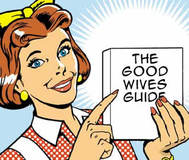
Several weeks ago Wendy Alsup wrote a striking post about how complementarians (folks who believe that men and women have differing roles in society, the home, and the church) are shooting themselves in the foot with faulty reasoning and extra-Biblical teaching. It seems that on our way to understanding manhood and womanhood, our generation has started taking some shortcuts—shortcuts that are going to have significant consequences for whether or not we develop a fully biblical understanding of gender and human relationships. In this sense, the concerns she mentioned are serious; but even more so is her overarching point: while we may have a seemingly noble goal, if we don’t reach that goal in an authentic and legitimate manner, we undermine everything we are trying to accomplish.
This is not a new problem for us humans. Whether it’s yelling at our kids to be quiet or speeding down the highway to avoid being late to an appointment, we regularly—although often unintentionally—conduct our lives under the assumption that the end justifies the means. Wendy’s post also got me to thinking about how this kind of pragmatism can invade our relationships, specifically our marriages.
Is it possible that in our attempts to reach an ideal, in our progress toward becoming “good” wives and husbands, we could actually be harming each other? I think it’s more than possible; I think it’s very common. And like so many areas of Christian living, the danger is not so much in what we’re doing, as what’s happening in our hearts and revealed through the process of doing them. And while I can’t speak for the men, here some problematic tendencies I’ve observed among Christian women—they are simply things I’ve heard, things I’ve seen, and truthfully, things I’ve done myself at times.
A federal appeals court on Tuesday declared California’s same-sex marriage ban to be unconstitutional, putting the bitterly contested, voter-approved law on track for likely consideration by the U.S. Supreme Court. A three-judge panel of the 9th U.S. Circuit Court of Appeals ruled 2-1 that a lower court judge correctly interpreted the U.S.

Discussion