Putting the New Papyrus of Jesus’ Sayings in Context
Body
“While exciting and important, much about a recently published, headline-grabbing fragment is not unique.” - Text & Canon
As iron sharpens iron,
one person sharpens another. (Proverbs 27:17)
“While exciting and important, much about a recently published, headline-grabbing fragment is not unique.” - Text & Canon
“They have honest questions about all kinds of theological matters—from social injustice to God’s sovereignty. Robust apologetics, then, provides opportunities to give answers rooted in logic and truth.” - TGC
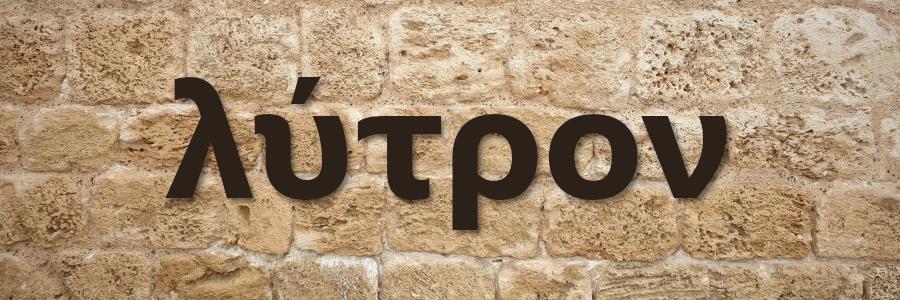
Three times, Mark records Jesus’ predictions of His coming passion (Mark 8:31; 9:31; 10:33-34). In His explanation of the third of those prophecies, Jesus tells His followers that He is going to give His life as a ransom (λύτρον): “the Son of Man did not come to be served, but to serve, and to give his life as a ransom for many” (Mark 10:45).
The concept of a ransom doesn’t connect with western culture in the 21st century. The only common use of that word today is in reference to kidnapping—usually by terrorists. But this was a very common word in the first century Greco-Roman world. Although it is used only twice in the New Testament, this word aroused immediate associations in the minds of those who read Mark’s gospel. It comes from the culture of slavery: sacral manumission, the ceremony by which a slave is set free.1 In the case of a polytheistic Greco-Roman,2 the slave owner takes the slave being freed to the temple of his god and sells the slave to the god. He is reimbursed for the slave from the pagan temple treasury.
The ceremony takes place in the presence of witnesses, and the manumission record is often recorded in stone—typically on the temple wall or pillar. This transaction is somewhat of a legal fiction, because it is not really temple money that is involved. Rather the slave himself (or his family or friends) have previously paid the specified amount into the temple treasury. Once the slave owner received the money, the slave became the property of the god. Ownership has been transferred. He does not become a slave of the temple, however, but a protégé of the god. In respect to his former owner, he is now a free man.
This piece and its follow ups are taken from my upcoming book (DV) ‘The Words of the Covenant, Volume 2: New Testament Continuation.’
“I give some strong reactions to Burgon, but I want to plead for a little grace as I work to make sure I’m understanding him well.” - Mark Ward
“The intention of this issue of FrontLine magazine is to focus the minds and hearts of the readers on the beauty of God.” - P&D
Read the series.
Yeshua was in His small hometown, Nazareth. He had probably read the Scriptures aloud in the local synagogue many times before, and would have been known to all. Yet this was the first time He read thusly after His ministry had been launched and His fame widespread.

Every day in every school, millions of schoolchildren are learning about God. In every subject.
Don’t think so?
Watch.
“What is the cause of this? There’s probably not one single answer to that question. Some of it is… overreaction to the retrieval of classical theism and Thomas Aquinas in Reformed circles.” - Ref21

Review of the book Dispensational Hermeneutics by Michael Vlach. It is published by Theological Studies Press (Paperback and Kindle, 111 pages).
The subtitle of the book is “Interpretation Principles that Guide Dispensationalism’s Understanding of the Bible’s Storyline.”
Introduction
Discussion