Should Christians Avoid Politics?
 From the archives. First appeared on 2/27/09. (Original discussion thread.)
If recent polls may be believed, most Americans now see their country as seriously troubled. For conservatives the times are especially disturbing. We are deeply opposed to the political philosophy now in power but are also alarmed at the resulting economic policies. We believe the solutions now in progress will be more damaging than the problems they are supposed to solve.
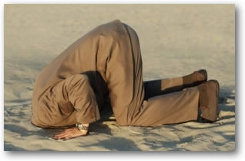
Among principled conservatives feelings about the situation range from intense frustration to utter futility. To many, the segment of Bible-believing Christendom that eschews politics is looking more and more like home. They are eying the creed that participation in politics has little or nothing to do with our responsibilities as followers of Jesus Christ and finding it increasingly attractive.
Over the last few months, I have also felt the appeal of tuning out. But certain realities have doggedly called me back to the belief that in a nation such as ours Christians can and must be involved in politics. And we have this responsibility even if—perhaps especially if—it appears we will accomplish nothing.
God cares what nations do
A principle feeding my conviction that believers should be involved in politics is the fact that God has expectations of nations. He is not “judge of all the earth” in a solely individualistic sense, nor is He concerned only with the salvation (and transformation) of individuals. Consider, for example, God’s rebuke of the nations in Amos 1:3-15. Here He finds fault not so much with how individual citizens have behaved but with how they have acted collectively as a nation. And they are judged accordingly.
Thus says the Lord: “For three transgressions of Damascus, and for four, I will not turn away its punishment, Because they have threshed Gilead with implements of iron.” (NKJV, Amos 1:3)
What’s more, at least once in Amos the judgment of a nation has nothing to do with its treatment of Israel or Judah.
Thus says the Lord: “For three transgressions of Moab, and for four, I will not turn away its punishment, because he burned the bones of the king of Edom to lime. But I will send a fire upon Moab, and it shall devour the palaces of Kerioth; Moab shall die with tumult, with shouting and trumpet sound. And I will cut off the judge from its midst, and slay all its princes with him,” says the Lord. (Amos 2:1-3)
Here God holds the national entity called Moab to an ethical standard which it had violated by its handling of the remains of the king of Edom (a nation condemned for sins of its own in Amos 1:11). Apparently, God has ethical expectations for what nations do when acting as nations. In other words He cares about national policy.
Given the fact that policy in America is shaped by the involvement of the electorate, we cannot separate policy from politics. If God cares about what nations do as nations, He cares about what the United Sates does as a nation, and He cares about the politics that shape what we do.
We are the government
Amos and other prophets show that God expects nations to treat other nations properly. Similarly, Romans 13 reveals that God expects nations to govern their own citizens properly, and He assigns specific responsibilities to government. Verse 4 indicates that the governing authorities “bear the sword” and serve as diakonoi (servants) and ekdikoi (justice givers or punishers) for God. The words good and evil appear repeatedly in the passage, emphasizing that government’s duties are ethical and moral.
It’s impossible to take these verses seriously and conclude that God does not care what happens in Congress or in my state assembly. But the implications of the passage for a society such as ours extend much further.
By design, the United States is a nation of laws shaped by the influences of representative democracy. The founders did not aim to give every man an equal voice in state or national policy, but they did aim to give every man an equal voice in whom he would send to act on his behalf (not necessarily to vote as he would vote but to build policy that protects the best interests of his family and his nation). Regular elections—coupled with the right of public protest—were built in to ensure that policy-making is never wholly separated from the citizenry.
To say it another way, in America the difference between government and the governed is intentionally blurred by law so that citizens have governing responsibilities (policy-shaping responsibilities), whether they want them or not. To be a citizen is to be an indirect policy maker. In that sense, we are all “the government.”
The fact that we are all legally entangled in the policy-making process means that the question is not “Will I be involved in politics and try to shape policy?” but rather “Will I shape policy well or will I, by passivity and silence, shape it poorly?” What we commonly refer to as “not involved in politics” is just a way of saying “not putting any effort into policy-making responsibilities.”
Because our government is structured the way it is, the moral and ethical responsibilities of government in Romans 13 are our moral and ethical responsibilities as citizens. The only difference is that, for most of us, our involvement is that of indirect influence rather than direct execution.
The place of prayer
I have often heard that the role of the Christian in earthly politics is simply to pray. Isn’t this what we are commanded to do?
Therefore I exhort first of all that supplications, prayers, intercessions, and giving of thanks be made for all men, for kings and all who are in authority, that we may lead a quiet and peaceable life in all godliness and reverence. (1 Tim. 2:1-2)
What the Scriptures require here is clear. Believers must pray for and about those in power and do so with the goal that they will essentially leave us alone.
The passage might seem to imply that we should also leave them alone, but that view extends the passage beyond what it actually says. Rather, prayer is never a substitute for action in Scripture, just as action is never a substitute for prayer. For example, Jesus commanded us to pray that the “Lord of the harvest” would “send out laborers” (Luke 10:2), yet He still commanded us to “go into all the world and preach” (Mark 16:15). The apostle Paul said it was “his prayer to God for Israel that they may be saved” (Rom. 10:1), yet he included outreach to Jews throughout his ministry. Likewise the call to pray for “all who are in authority” does not preclude acting deliberately to influence them.
Taking action when we have neglected prayer is foolish and irreverent, but praying when we ought to be acting is foolish and irresponsible. Imagine that fire fighters have been summoned to the site of a burning apartment complex. They arrive, take positions, unpack the hoses, and connect them to hydrants. But rather than douse the flames, they pull out their cell phones and repeatedly dial 911 as the building burns.
The analogy is imperfect. God possesses the power to intervene directly in the affairs of men and “put out fires” in response to prayer alone. But should we assume that direct intervention by Himself alone is His intention when He has not said so and has given us the means to attack the flames ourselves?
Morality shapes everything
A final reality that keeps me from adopting the “politics is none of our business” stance is the fact that the moral condition of a community impacts everything else in it. I cannot fulfill my responsibilities as husband and father as effectively in Sodom as I can in better surroundings. And if Lot chose poorly in going to “the cities of the plain” (Gen. 13:12), am I not choosing poorly if I allow “the cities” to come to me? What’s certain is that we and our families cannot be unaffected if moral decadence descends all around us (2 Pet. 2:7-8).
Proverbs underscores this principle.
A wicked man accepts a bribe behind the back to pervert the ways of justice. (Prov. 17:23)
The proverb describes a perilous situation. A morally corrupt man influences or makes policy but does not do so according to principle or law. He perverts “the ways of justice” by seeing that someone is punished arbitrarily rather than for wrong-doing. As this blight spreads in a community, people see less and less relationship between their behavior and what government does to them. Lawlessness increases, and eventually no one anywhere is safe.
If I live in such a place, I can only successfully protect my family and my property (God-given responsibilities) as God intervenes to prevent what is otherwise the inevitable course of nature. But will He intervene in that situation if I could have stemmed the tide of lawlessness years earlier but chose not to?
Just as declining morality ruins the relationship between law-abiding behavior and personal well being, it also ruins the relationship between labor and personal prosperity.
Much food is in the fallow ground of the poor, and for lack of justice there is waste. (Prov 13:23)
This proverb can be taken to mean that lack of justice has allowed the poor to be robbed, but the view that answers best to the evidence is that injustice has somehow led the poor to let their land lie idle. This meaning is more clear in the ESV.
The fallow ground of the poor would yield much food, but it is swept away through injustice. (ESV, Prov 13:23)
The proverb describes a situation in which the land of the poor could have been producing abundance, but bad policy (or poor execution of good policy) made waste more appealing. The poor here probably feel that growing the crops will do them little good because the fruit of their labor will be taken away, either by robbers or by oppressive taxation. Either way, immoral policy has guaranteed that citizens and their families see little relationship between hard work and food on the table. As that relationship deteriorates in a community, production falls off. Soon there isn’t enough of anything.
We’re foolish if we believe that bad policy and moral confusion can spread indefinitely without eventually hindering our own ability to live and serve God. Yes, God can intervene to spare His children from the worst that lawlessness and want bring on a society, but should we assume that He will do so if we have the means to influence policy and morality for good but choose instead to “avoid politics”?
Some may object here that we “cannot legislate morality.” But in reality government exists for no other reason than to punish “evil” (what is morally wrong) and reward “good” (what is morally right). To the degree Christians can influence policy toward effectiveness in that purpose, we are wise to do so. To do less is to welcome a future of violence, chaos, and poverty from which God will have no obligation to deliver us.
Aaron Blumer Bio
Aaron Blumer, SharperIron’s second publisher, is a Michigan native and graduate of Bob Jones University (Greenville, SC) and Central Baptist Theological Seminary (Plymouth, MN). He and his family live in a small town in western Wisconsin, not far from where he pastored Grace Baptist Church for thirteen years. He is employed in customer service for UnitedHealth Group and teaches high school rhetoric (and sometimes logic and government) at Baldwin Christian School.


Appreciate the challenges to my thinking.
Just one more observation in the interest of clarity.
1. God cares about what nations do.“Political activism” is not a term I have used and isn’t really an accurate one for what I’m talking about (though I certainly do believe some should be activists).
2. We should care about what nations do.
3. The only way for us to care about what nations do is political activism.
4. Therefore, Christians must engage in political activism.
The word “argument” is somewhat ambiguous. There’s the overall argument of the piece, then the arguments (really sub-arguments) that form that overall argument.
Your summary above is sort of close to one of my sub-arguments. In reality, it goes like this: God cares about what nations do. We should also. We should not avoid politics, thinking that what our government does is none of our concern.
(I’ve still omitted several premises. The argument is a http://www.britannica.com/EBchecked/topic/554926/sorites] sorites —or a close cousin, as are the rest. Breaking them down into all their syllogisms would be pretty tedious.)
The overall argument includes 3 additional sub-arguments.
2. To a significant degree, this is indeed a government “by the people.” We should not avoid politics thinking that we have no responsibilities in that realm.
3. Prayer is not a substitute for action or vice versa. We should not avoid politics on the grounds that we can pray instead.
4. This one is a bit more complex than it may seem: The moral character of a society affects everything else in it. Our involvement in the political process influences the moral character of our society. We should not avoid politics thinking there will be no important negative consequences for our neighbor and our posterity.
Those are the four subarguments of the essay. Pretty sure more arguments exist, some of them better than these.
Views expressed are always my own and not my employer's, my church's, my family's, my neighbors', or my pets'. The house plants have authorized me to speak for them, however, and they always agree with me.

By political activism, I mean actively engaging in the process by at least voting.
I still think your argument lacks cohesiveness in that the third sentence (We should not avoid politics…) is disconnected from the first two. It is quite a leap in my opinion.
The counter to your argument is not the opposite of responsibilities in the realm of government. It is specifically how you assert those responsibilities should be carried out. I say preach, pray, and obey. You say be politically active.
I have answered 3 several times. Pray is action according to Scripture. You never explained why we should view pray in a passive sense. Scripture does not view it that way, ever.
Political engagement will not affect the moral character of a culture biblically. Scripture does not instruct us to make moral men. It commands us to make disciples. What business does the church have with trying to create a bunch of moralists. Isn’t this precisely what Liberal theology and now the Seeker movement have done for years now? This is exactly the problem in Christendom. We think WE can change things and so we come up with strategies to enhance the culture, make it more moral, get it to live on Christian principles, so-called. In the end, we produce a bunch moral, God-hating deists and we actually delude ourselves into thinking that we have actually accomplished something when we have likely made things worse. In the end, there simply aren’t enough of us to make a difference, not really. The only hope for our culture is the power of Christ and the cross preached everywhere. If our hope is in political involvement, then we have a sorely misplaced hope.
Let us get back to the basics of Christian doctrine and praxis, to the preaching of the cross, to the authority of Scripture, to making disciples, to being the light God has called us to be. Then let us see what happens. Maybe God sends revival or maybe He sends tremendous persecution. Either way, His glory will reign.
I have no greater joy than this, to hear of my children walking in the truth. III John 4

Political engagement will not affect the moral character of a culture biblically. Scripture does not instruct us to make moral men. It commands us to make disciples. What business does the church have with trying to create a bunch of moralists. Isn’t this precisely what Liberal theology and now the Seeker movement have done for years now? This is exactly the problem in Christendom. We think WE can change things and so we come up with strategies to enhance the culture, make it more moral, get it to live on Christian principles, so-called. In the end, we produce a bunch moral, God-hating deists and we actually delude ourselves into thinking that we have actually accomplished something when we have likely made things worse. In the end, there simply aren’t enough of us to make a difference, not really. The only hope for our culture is the power of Christ and the cross preached everywhere. If our hope is in political involvement, then we have a sorely misplaced hope.You know you are really preaching to the choir here on sharper iron. Over the past 5 years that I’ve been a poster here, what I’ve seen as the general consensus is that most do not put their hope in politics and as far as I can tell, are not trying to create a bunch of moralists in our nation. They would be the first to tell you that it is the gospel of Jesus that changes lives, not living by Judeo-Christian values. They would even tell you that disciple-making is what the church is called to do. Yet they see some value in taking part in the political process, not as a church but as individual Christians. I wonder if because your neck of the woods is the Bible belt, you constantly see conservative evangelical and fundamental Christians that are mixing their politics with Jesus (which leads to a distorted gospel) that you feel you have to passionately warn those who do see some value in participating in politics not to fall into the same trap as those around you……..
Since very view have chimed in, I have no idea what people in SI believe. There was another who seemed to have serious disagreement with me.
The debate between Aaron and I seemed to clearly indicate that we are not on the same page. I find you post a little confusing to be honest. In addition, I don’t think the problems in the church are exclusive to the bible belt. The gospel is not preached in far more churches in every region than it is. Arminian and Semi-Pelagian theology has crowded out the gospel when taken to its logical end. We are left with a life coach rather than a Savior and soteriology is far more deistic than biblical.
I have no greater joy than this, to hear of my children walking in the truth. III John 4
Discussion