FBFI Resolution 09-03
Regarding Limited Participation
 Whereas the Scripture admonishes believers generally to maintain fellowship with one another in the love of Christ and in the bond of peace,
As iron sharpens iron,
one person sharpens another. (Proverbs 27:17)
Whereas the Scripture admonishes believers generally to maintain fellowship with one another in the love of Christ and in the bond of peace,
Editor’s Note: This article accompanies FBFI Resolution 09-02 and is reprinted with permission from the May/June 2009 issue of FrontLine magazine.
 One criticism leveled against Fundamentalists is their refusal to engage the culture. Sociologist Alan Wolfe writes, “When believers refuse to engage the culture, their opponents dismiss them as fanatics, frustrated people rendered insecure by the dilemmas and opportunities of modernity.” 1 Implicit in this complaint is resentment toward Fundamentalists for being unsociable: they are generally an intolerant people who do not mix well with their culture. Interestingly, this same complaint was directed against first-century believers by Roman hedonists.
It is true that historically Fundamentalists have refused to tolerate, let alone participate in behavior that exalts sensual pleasure and denigrates Christian values. The criticism is perennial, and understandably so, since sincere Christians have taken seriously the Biblical admonition to love not the world, neither the things that are in the world. They love and are loved by God, whose values are theirs and whose commands they seek to obey. And those living for the world have hated them for it.
Whereas true believers have always functioned actively within the culture in which they find themselves,
And whereas Jesus Christ clearly indicated the true believers must live in the world but not of it,
 Editor’s Note: This article accompanies FBFI Resolution 09-01.
The word evangel means gospel. Therefore, to be evangelical is to be defined by the gospel. At minimum, those who claim to be Evangelicals should have a very clear idea of what the gospel is.
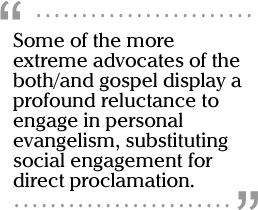
Within today’s Evangelicalism, however, the content of the gospel is the subject of significant disagreement. Many contemporary Evangelicals are attempting to create an understanding of the gospel that is much more inclusive than the message of personal salvation. While these Evangelicals do not always deny a personal gospel (and some are fervently committed to it), they think that the gospel must also deal with other issues, including problems of a psychological, social, and environmental nature. What they proclaim is neither simply a personal gospel nor a social gospel. It is a both/and gospel.
The basic argument for the both/and gospel is that sin has done more than to disrupt our personal relationship with God. It has disrupted the inner integrity of each individual, resulting in the disintegration of emotional wholeness. It has disrupted the relationship between humans, resulting in oppression and exploitation. It has disrupted our relationship to the created order, resulting in the ruination of nature through human abuse. According to proponents of the both/and gospel, a meaningful gospel must address each of these issues directly.
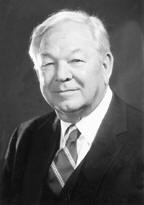 Editor’s Note: Today marks the one hundredth anniversary of Dr. Monroe’s birth. He went home to glory on July 17, 1994.
“There was a man sent from God, whose name was John” (John 1:6). John Monroe Parker was born June 23, 1909, in Thomasville, Alabama. His parents, Jacob and Lucy Parker, named him after John Parker, a paternal uncle who was a Baptist preacher, and Monroe, a maternal uncle who died in infancy. He was always known by his middle name. Before he reached school age, Parker’s parents moved the family to Texas. When he was thirteen, his parents returned to Thomasville, Alabama, and in 1925 the family moved to Birmingham. There the robust young man, an outstanding athlete, finished high school and entered college.
Monroe’s parents were godly people, and they provided a godly atmosphere in the home. Monroe made a profession of faith at eight years of age and was baptized in Edgewood, Texas. He records that though he gave intellectual assent to the truths of Christianity, “I was a sinner and I knew it.” 1 Many of us remember Monroe Parker’s statement about his early college years as a lost church member. He used to say, “I helped make the twenties roar.” 2
Note: This article is reprinted from The Faith Pulpit (January/February 2004), a publication of Faith Baptist Theological Seminary (Ankeny, IA). It appears here with some slight editing.
 Any fundamentalist who has kept up with the conservative resurgence within the Southern Baptist Convention (SBC) is glad for conservatives’ advances and rejoices with them in their success. There are several books and articles which have been written from various perspectives about what has happened within the SBC since 1979. Perhaps one of the most significant is The Baptist Reformation (The Conservative Resurgence in the Southern Baptist Convention) by Jerry Sutton, written from the conservative point of view and published in 2000 by the SBC’s denominational publishing house, Broadman & Holman Publishers. The book’s significance is indicated by the endorsements it has received from many of the leading Southern Baptists today, including Morris H. Chapman, James T. Draper, Jr., Kenneth S. Hemphill, Richard D. Land, R. Albert Mohler, Jr., Paige Patterson, Adrian Rogers, Jerry Vines, Ed Young, and others.
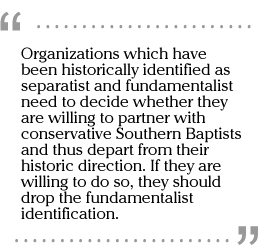
Still, fundamentalists have raised an important question: “Are these conservative Southern Baptists really fundamentalists?” The question is important, for its answer will largely determine whether those professing fundamentalism ought to embrace the SBC and its leadership. Organizations which have begun as fundamentalist in orientation, such as the Baptist Bible Fellowship International (BBFI) and the General Association of Regular Baptist Churches (GARBC), are currently facing this issue. Therefore, the question is not only important, it is also timely.
Thomas Road Baptist Church in Lynchburg, Virginia, pastored by Jerry Falwell, has Liberty University as one of its ministries. This church is listed as both a BBFI and SBC church (see the appropriate denominational web sites), and Jerry Falwell’s National Liberty Journal had as a front page headline, “Liberty University Officially Approved as SBC School” (December 1999, vol. 28, no. 12). The GARBC lists Cedarville University of Cedarville, Ohio, as one of its partnering agencies. Yet Cedarville has also “entered a partnership with the State Convention of Baptists in Ohio [SBC]. The partnership was formalized in November [2002] during the 49th annual session of the state convention when messengers overwhelmingly approved the agreement” (Baptist Press news, www.bpnews.net/bpnews.asp?ID=14969, January 3, 2003). And the SBC web site lists Cedarville University under its category “Colleges and Universities.” Even more recently Western Baptist College in Salem, Oregon, another school partnering with the GARBC, has been endorsed by the Northwest Baptist Convention and its executive board “as an educational institution that their member churches should support financially and promote as a preferred college for their young people.” The Northwest Baptist Convention is associated with the Southern Baptist Convention.

Discussion