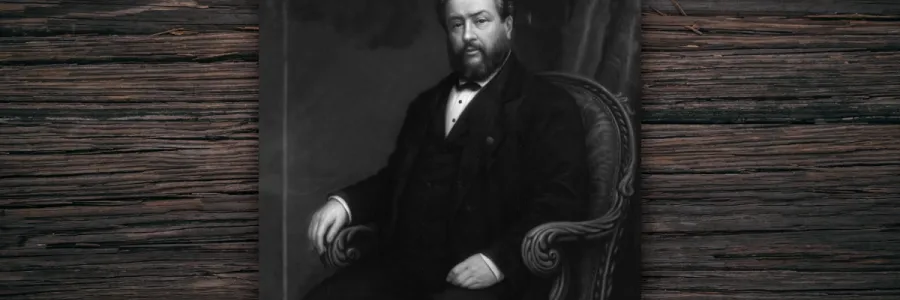
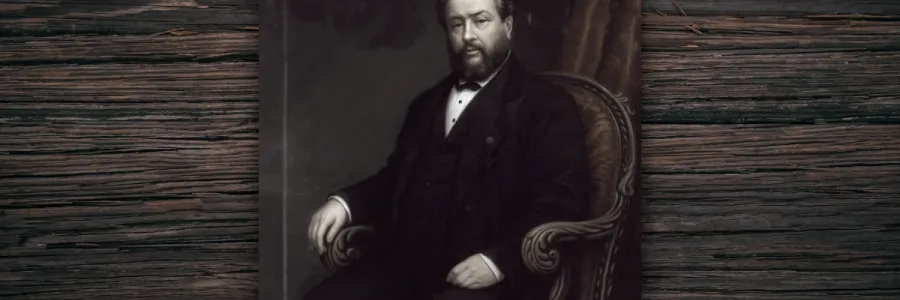
Charles Spurgeon
Christ's Resurrection and Our Newness of Life
By C. H. Spurgeon. Sermon 2197 delivered on Lord’s-day morning, March 29th, 1891 at the Metropolitan Tabernacle, Newington.
“Therefore we are buried with him by baptism into death: that like as Christ was raised up from the dead by the glory of the Father, even so we also should walk in newness of life.” (Rom. 6:4)
Discussion
A Christmas Question
Sermon 291 by C. H. Spurgeon, delivered on Sunday, December 25th, 1859 at Exeter Hall, Strand.
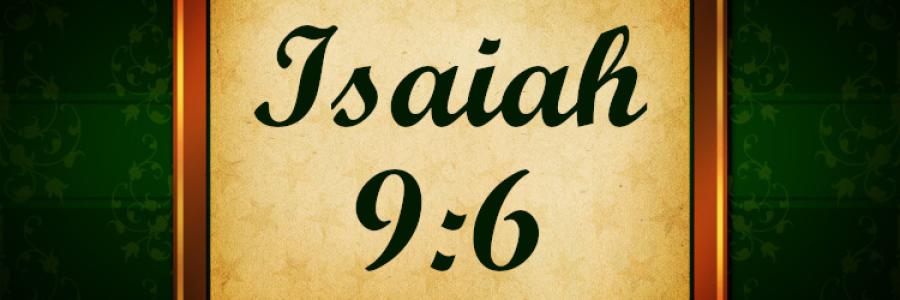
“For unto us a child is born, unto us a son is given.”—Isaiah 9:6.
Upon other occasions I have explained the main part of this verse—”the government shall be upon his shoulders, his name shall be called Wonderful, Counsellor, the Mighty God.” If God shall spare me, on some future occasion I hope to take the other titles, “The Everlasting Father, the Prince of Peace.” But now this morning the portion which will engage our attention is this, “Unto us a child is born, unto us a Son is given.” The sentence is a double one, but it has in it no tautology. The careful reader will soon discover a distinction; and it is not a distinction without a difference. “Unto us a child is born, unto us a Son is given.” As Jesus Christ is a child in his human nature, he is born, begotten of the Holy Ghost, born of the Virgin Mary. He is as truly-born, as certainly a child, as any other man that ever lived upon the face of the earth. He is thus in his humanity a child born. But as Jesus Christ is God’s Son, he is not born; but given, begotten of his Father from before all worlds, begotten—not made, being of the same substance with the Father. The doctrine of the eternal affiliation of Christ is to be received as an undoubted truth of our holy religion. But as to any explanation of it, no man should venture thereon, for it remaineth among the deep things of God—one of those solemn mysteries indeed, into which the angels dare not look, nor do they desire to pry into it—a mystery which we must not attempt to fathom, for it is utterly beyond the grasp of any finite being. As well might a gnat seek to drink in the ocean, as a finite creature to comprehend the Eternal God. A God whom we could understand would be no God. If we could grasp him he could not be infinite: if we could understand him, then were he not divine. Jesus Christ then, I say, as a Son, is not born to us, but given. He is a boon bestowed on us, “For God so loved the world, that he sent his only begotten Son into the world.” He was not born in this world as God’s Son, but he was sent, or was given, so that you clearly perceive that the distinction is a suggestive one, and conveys much good truth to us. “Unto us a child is born, unto us a Son is given.”
Discussion
Special Thanksgiving to the Father
Preached January 15th, 1860 by C. H. Spurgeon (1834-1892)
Giving thanks unto the Father, which hath made us meet to be partakers of the inheritance of the saints in light: Who hath delivered us from the power of darkness, and hath translated us into the kingdom of his dear Son. (KJV, Colossians 1:12-13)
This passage is a mine of riches. I can anticipate the difficulty in preaching and the regret in concluding we shall experience this evening because we are not able to dig out all the gold which lies in this precious vein. We lack the power to grasp and the time to expatiate upon that volume of truths which is here condensed into a few short sentences.
We are exhorted to “give thanks unto the Father.” This counsel is at once needful and salutary. I think, my brethren, we scarcely need to be told to give thanks unto the Son. The remembrance of that bleeding body hanging upon the cross is ever present to our faith. The nails and the spear, his griefs, the anguish of his soul, and his sweat of agony, make such tender touching appeals to our gratitude—these will prevent us always from ceasing our songs, and sometimes fire our hearts with rekindling rapture in praise of the man Christ Jesus. Yes we will bless thee, dearest Lord; our souls are all on fire. As we survey the, wondrous cross, we cannot but shout—
O for this love let rocks and hills
Their lasting silence break,
And all harmonious human tongues
The Savior’s praises speak.
Discussion
Charles Spurgeon’s Surprising Thoughts on Aliens
Body
“I’ve read a lot by Charles Spurgeon, but the 63 volumes of his sermons alone come to 25 million words…. So when Tony Reinke shared these great and unusual quotes from Charles Spurgeon, I shouldn’t have been surprised that I had never before read them” - Randy Alcorn
Discussion
Good Judgment
Sermon No. 2688, intended for reading on Lord’s-Day, August 19, 1900. Delivered by C. H. Spurgeon, at the Metropolitan Tabernacle, Newington, on Thursday evening, July 21, 1881
“You have dealt well with Your servant, O LORD, according unto Your Word. Teach me good judgment and knowledge: for I have believed Your Commandments.” – Psalm 119:65, 66.
Discussion