Review: New Creation Eschatology and the Land, by Steven L. James
This book provides an informative introduction and critique of the recent trend among scholars to stress earth-centeredness of the eschatological passages of Scripture rather than heaven-focused scenarios. The trend is most noticeable among amillennialists, especially since the publication in 1979 of Anthony Hoekema’s The Bible and the Future. That book called upon believers (especially Hoekema’s fellow amillennialists) not to spiritualize the OT passages that speak of a coming era of peace and righteousness on the earth. This planet, in its restored state, is the venue for the enactment of God’s eschatological promises.
The author, who serves as a Professor at Southwestern Baptist Theological Seminary in Fort Worth, TX, examines the works of several prominent teachers of the “New Creation” eschatology; namely, N. T. Wright, J. Richard Middleton, Russell Moore, Douglas Moo, and Howard Snyder. Not all of these writers were directly influenced by Hoekema’s work. He notes that although they correctly stress the earth’s central role in our future, he argues (again correctly) that they ignore the specificity of the land promises to Israel and thus contain a major contradiction. The contradiction is this: how can the OT promises of restoration and renewal be taken literally and every mention of Israel or Jerusalem be treated as metaphorical? It is a very good question.
In the first chapter James gives a survey of these men’s approaches. He notes that the arguments of these men are grounded in OT passages such as Isaiah 2, 11, 52; 60, 65-66; Micah 4; etc. These passages stress both the reign of justice and peace on the earth. James says that all his chosen scholars emphasize “the coming of God’s kingdom, bodily resurrection, and the reconciliation of all things.” (26).
The second chapter demonstrates that New Creation authors all believe that there is continuity between this present earth and the next. They all emphasize God’s “mode of materiality.” As he says,
The idea of transformation of the present materiality is important to new creationists. Because matter is not understood as inherently sinful, it does not have to be utterly disposed of… New creationists affirm that, instead of being annihilated, the present creation will be renewed or transformed. (31)
Several pages are dedicated to showing how New creationists tackle such dissolution passages such as 2 Peter 3:8-9 (32-36). The arguments which James records were not very convincing.
Chapter three discusses “Land Theology” as it has been presented by the likes of W. D. Davies, Walter Brueggemann, Christopher Wright, Gary Burge, and others. These influential works all contain supercessionist theology, and have been relied upon by many in the New Creation movement. The basic outlook is that the land of Israel is treated as a metaphor (77-94).
Having documented the views of New creationists, in the fourth chapter the author begins to highlight the inherent contradiction of asserting earth continuity on the basis of OT texts, while at the same time treating territorial promises to Israel as metaphors, when those promises occur in the very same passages! James states the sane conclusion:
The language in the prophets in no way suggests that the particular territory of Israel or Jerusalem somehow envelops the territory of the rest of the world. More importantly, the idea that a particular territory of the earth somehow transforms into the entire earth makes no sense in a new creation conception that envisions the restoration of the present earth. (117)
Chapter five is where the author shows that there is no need to create metaphors of the land of Israel, and that, in fact, the notion of territorial particularity and nationhood is a clear biblical teaching of both Testaments. Here he notes the work of dispensational authors Craig Blaising and Michael Vlach (131-132), who are more consistent in their attention to scriptural details. He also mentions amillennial writer Vern Poythress, who appears to accept the reality of nationhood in the new heavens and new earth (132-134).
In his conclusion the author points to a few areas of fruitful exploration, such as the study of “place,” and ends with a plea for further work in this area.
In my opinion New Creation Eschatology and the Land is a very worthwhile monograph, filled with good exposition, logical thinking, and solid argumentation. He is fair-minded and irenic throughout. I hope many students of theology will take the time to give the book a close reading.
Paul Henebury Bio
Paul Martin Henebury is a native of Manchester, England and a graduate of London Theological Seminary and Tyndale Theological Seminary (MDiv, PhD). He has been a Church-planter, pastor and a professor of Systematic Theology and Apologetics. He was also editor of the Conservative Theological Journal (later Journal of Dispensational Theology). He is now the President of Telos School of Theology.



When was the church in bondage in Egypt and led out by the hand of YHWH?
1. The first question is telling only if Jer. 31 is the only passage on the New Covenant. But it isn’t.
But the NC isn’t less than Jer 31, is it? It specifically tells us who the parties are. That doesn’t change anywhere else, does it?
When was the church party to the Mosaic covenant which they broke? If they weren’t party to the Mosaic covenant, then in what sense is the NC new?
2. The Church is not a party to the NC, but it doesn’t have to be. The basis of the MC is the Ten Commandments, and nine of them are universally binding, and are repeated to the Church in the NT.
You are going to answer this differently because of your view of the NC. I am not sure what you mean by “basis.” I don’t think I would use it that way, but the Ten Commandments are the expression of God’s law for that time and people. The repetition of them in the NT is not because they are the 10 commandments but because they are part of God’s way of living. Those 9 existed prior to the MC. No one prior to Exodus 20 was allowed by God to worship something else, to make a graven image, to steal, to commit adultery, etc. The 10C was the codification of God’s law for a particular people at a particular time. We, as Christians, follow the 9, not because they are part of the MC/Law of Moses but because they are part of God’s created order.
Where is the rebuilt city existing in peace?
3. This is an example of Abrahamic and Davidic covenants being included and revitalized by the NC.
I agree. But it still has to happen, doesn’t it?
How can the church be part of Israel when God specifically declares he has made Jew and Gentile into one new man? (Not included into the old man of Israel.)
4. The NC is not just promised to Israel, unless you think Jer. 31 is the only NC passage. Other passages plainly include the Nations.
Eph 2 is different though. The Gentiles there are not included in the OT covenant people; they are strangers to the covenant, excluded from the commonwealth of Israel. They are not then included into the covenant people. There is a “new man” created—the church, not Israel.
If Hebrews includes the church in the NC, why does it only cite part of the NC?4
5. Because Hebrews is written to Hebrews, in my view it is not written to the whole Church, although many of its truths apply to the Church. It might be profitably viewed as the 40th OT book if you like.
This is an old dispensational view that I can’t affirm. It was written to Hebrews, but to Christian Hebrews—the church. But even that doesn’t answer the question. Why does it omit the rest of the NC? Even if we grant that it was written to Hebrews, not the church as a whole, we still have to answer the question of why it omits part of the NC.
We could answer with Dodd perhaps, that citing part of an OT passage is invoking the whole passage, though I am not sure that works here. It would be better, IMO, to say that he quoted only the part that applied to his audience. He didn’t cite the whole thing because he took the dispensational view that the whole NC was not applicable to the church for obvious reasons.
Paul H, if I will concede that I don’t have any additional examples, will you answer my question about how the doctrine of the Trinity is derived? (inductively or deductively)
I don’t have any examples at hand, and am too pressed for time to begin searching. So, to move the discussion along, let me concede that I made a general statement that I am not currently able to support. (Perhaps another time when things aren’t quite as busy.)
But, it seems the Trinity question is pretty fundamental to your point, unless I misunderstand what you are saying. I hear you to say that doctrine derived inductively is superior to conclusions arrived at deductively. I don’t think I am avoiding your point. I think I am answering it with an illustration about the doctrine of the Trinity. Without deductive reasoning, would we have this doctrine?
G. N. Barkman

The question of which scriptural texts inform our understanding of the NC seems to be pretty significant. Different interpreters place different weight on a variety of texts, and this contributes to some of the difficulty in arguing the different views within dispensationalism. To me, Dave Frederickson’s contribution to Dispensational Understanding of the New Covenant is very helpful on this score. Promises made in the Abrahamic covenant, for instance, cannot be said to be “new covenant” blessings, yet that is exactly what many seem inclined to do. A little clarity on which texts reveal distinct NC elements goes a long way.
The New Covenant may, or may not be the primary example of dispensationalists failing to accept NT statements at face value. But it is obviously a major issue. The discussion on this thread pits two men, more highly educated and capable than I, against each other. Both claim to study the Scriptures using the same hermeneutic, but are seriously at odds over the inauguration of the New Covenant. Perhaps starting with the OT, and interpreting the NT in light of the OT is not so perspicuous as supposed. (My point? Perhaps this is because the approach is backwards. Maybe we should revisit our understanding of the OT in light of the NT. I know. I’m a glutton for punishment. I will get ready to duck.)
G. N. Barkman
Perhaps starting with the OT, and interpreting the NT in light of the OT is not so perspicuous as supposed. (My point? Perhaps this is because the approach is backwards.
How would the early church have done what you suggest since they didn’t have the NT? Was there anything from the OT that they (and those before them) should have believed “at face value”?
How do you evaluate Kaiser’s statement above because he says the opposite, that it is backwards to require later revelation to interpret earlier revelation, precisely because the early Christians could not do that?
I would also press back on the whole idea that dispensationalists are failing to accept NT statements at face value. What is the evidence for that? It seems that the argument is based on two things: (1) Communion and the “new covenant in my blood” with respect to inauguration or participation of some sort and (2) the partial citation of the NC in Hebrews 8. Are there other lines of argument that are slipping my memory?
By taking the teaching of Jesus and the Apostles as their guide. (cf. Luke 24:27) Clearly first century Jews had difficulty understanding prophetic portions of the OT. They needed the coming of Christ to bring clarity. (And as much as I enjoy Kaiser, I disagree with him on this particular perspective. But he was a very interesting and engaging public speaker.)
G. N. Barkman
By taking the teaching of Jesus and the Apostles as their guide.
But Jesus and the apostles didn’t address everything. And much of the apostles teaching came decades after the church had begun. So isn’t this clearly an unworkable option? To this day, much of the debate about the OT is because the NT doesn’t address it. If we are to take the teaching of Jesus and the Apostles as our guide, we are stuck with no options.
Furthermore, this doesn’t address the OT generation, who were expected to understand and live their lives by this revelation without benefit of any of the teaching of Jesus and the Apostles.
(cf. Luke 24:27) Clearly first century Jews had difficulty understanding prophetic portions of the OT. They needed the coming of Christ to bring clarity.
Was is that they had a difficult time understanding or was is that they didn’t believe? Jesus did not rebuke them in Luke 24 for lack of understanding but for failing to believe all that the prophets have spoken.
Might it be that our problem is not lack of understanding in some of these things but failure to believe what was spoken? As I said earlier, I think we have really overcomplicated this because … well, who knows. Is it really that hard to believe that there is a future for national Israel when the NC is fulfilled with them? Why is there so much objection to that? Yes, it’s a simple solution, but why is that bad?
No, Jesus and the Apostles probably didn’t address everything. That’s why I said the early Christians took their teaching as their guide. (Of course, we can’t be sure they didn’t teach verbally more than is recorded in Scripture.) But surely you don’t intend to assert that the Apostles teaching didn’t come until decades after the church began. The Apostles were teaching immediately after the church began. Peter’s sermon at Pentecost is an example, and his treatment of Joel’s prophecy is an early indication of how the Apostles treated OT prophecy. The Apostles early teaching became the basis for NT doctrine beginning days after Christ’s ascension.
Furthermore, Jesus and the Apostles didn’t have to address everything. A dozen examples of their handling of OT prophecy is a helpful guide to interpreting the rest.
G. N. Barkman
But surely you don’t intend to assert that the Apostles teaching didn’t come until decades after the church began.
In some cases it didn’t come until decades after, particularly probably Hebrews that is being appealed to here.
Peter’s sermon at Pentecost is an example, and his treatment of Joel’s prophecy is an early indication of how the Apostles treated OT prophecy. The Apostles early teaching became the basis for NT doctrine beginning days after Christ’s ascension.
Yes, and I would argue this is strong evidence for a dispensational view. The fact that the NT apostles used the OT so widely and freely indicated that they believed that their “new teaching” could be easily seen in the “old teaching.” Again, it would not do to use a text in a way in which every Jews would say, “No, that’s not what it says.”
A dozen examples of their handling of OT prophecy is a helpful guide to interpreting the rest.
This actually depends on what ones thinks the apostles were doing—whether operating by exegesis or revelation. Here I will commend the articles of Longenecker (“Can We Reproduce the Exegesis of the New Testament?”) and Walton (“Inspired Subjectivity and Hermeneutical Objectivity”).
Longenecker says, “Apart from a revelatory stance on our part, I suggest that we cannot reproduce their pesher exegesis” (Longenecker 1970, 36). He further affirms that “Our commitment as Christians is to the reproduction of the apostolic faith and doctrine, and only secondarily (if at all) to the specific apostolic exegetical practices” (Longenecker 1970, 38).
Walton says, “The NT authors never claim to have engaged in a hermeneutical process, nor do they claim that they can support their findings from the text; instead, they claim inspiration … For the NT authors, the response to the question “Why should I believe that” is that they got the information for their interpretation from God … If you have inspiration, you do not need historical-grammatical hermeneutics. If you do not have inspiration, you must proceed by the acknowledged guidelines of hermeneutics.” (Walton 2002, 70)
The primary issue here is that of authority: By what authority does a preacher say what he says? By what means will he attempt to convince an audience to agree with him? It seems that the fundamental answer to this question must be “the text.” A message can be authoritative only if it can be shown that it is what God said in that particular text. To appeal to imagination, however “Spirit-led” it might be, is ultimately to place the authority in the mind of the interpreter, in this case, the preacher.
We must remember that the NT authors’ goal was to convince their readers that Jesus was the Christ of God, sent for the salvation of the world. To prove this with an illegitimate or unapparent use of Scripture would hardly have been convincing. The Scriptures continually appeal to the OT for its authority by using phrases like “It has been written” (e.g., John 6:45, Rom 3:10, Rom 9:13) or “As the Scripture says” (e.g., Rom 9:17, 1 Tim 5:23, Jas 2:23). Such appeals only make sense if it can be shown that “it” has indeed been written or has been said in the Scriptures. After all, if the Christological interpretation was hidden, “then how could it have been persuasive for those considering whether Jesus was the one sent from God according to his plans for all eternity?” (Kaiser 2003, 22).

Greg, I accept your response. To your question about the deductive nature of the doctrine of the Trinity, let me supply a fuller answer.
When I characterized non-DT as “deductive” I was not denying that it does inductive exegesis, nor a I saying that DT’s don’t do deduction. In fact, I think much of their dispensational structure is deductive, which is another reason I go by God’s covenants. As a mater of fact, theology mixes both approaches (which is “abduction”).
But I think it is demonstrably true from reading their commentaries and theologies, as well as from their interactions and defenses of their position(s), that non-DT’s do a great deal more deduction than do DT’s, both in their starting assumptions, and in their exegesis. This is why they are attracted to theological interpretation and the widening of the “context” to include the whole Bible.
So as to the Trinity, as I demonstrated in my Rules of Affinity posts a while ago, that doctrine is a ‘C2’ in the affinity between its texts and its propositions. That is to say, direct passages tell us that the Father is God, the Son is God, and the Spirit is God, yet we are told just as strongly that God is one. So out of these inductively arrived at truths we are forced to deduce that God is a Trinity.
Now this is NOT what is happening with the claim that the Church is Israel. I showed this here. There is no direct statement to this effect, and the proposed verses (e.g. Rom. 2:28-29; 9:6; Gal. 6:16 etc.) are heavily disputed, by non-DT’s as well as DT’s. Therefore, there is no comparison between the biblical doctrine of the Trinity and the Church = the New Israel.
Dr. Paul Henebury
I am Founder of Telos Ministries, and Senior Pastor at Agape Bible Church in N. Ca.
I have wanted to write out my thoughts on the NC for a while and this sort of comment prompts me to get on with it.
Dr. Paul Henebury
I am Founder of Telos Ministries, and Senior Pastor at Agape Bible Church in N. Ca.
I will look forward to reading that, Paul.
Peter’s Pentecost sermon provides one of many examples of how Christ and the Apostles handled OT prophecy. Peter quotes Joel 2:28-32, a section that considered only in the context of the OT, might be thought to apply strictly to national Israel. But Acts 2:17-21 applies the events of Pentecost and the fledgling NT church as the fulfillment of Joel. “but this is what was spoken of through the prophet Joel” (Acts 2:17)
In my former dispensationalism, I struggled to reconcile the words of Joel with those of Peter. Peter’s utilization of Joel seemed a bit jarring. But after struggling with a number of similar examples of inspired NT authors handling OT prophetic texts, I began to realize that they regularly declared that OT prophecies made to Israel found fulfillment in the New Covenant church. Though difficult to swallow at first, I was gradually compelled to revisit my formerly strong dichotomy between Israel and the Church. This dichotomy is foundational to DT. The Apostles indicate a stronger correlation between Israel and the Church. Something has to give. I decided I must follow where the inspired NT led.
I don’t think we can lock in a particular hermeneutic in our study of the OT, and then reinterpret the plain statements of the NT to conform to our hermeneutic. After all, hermeneutical principles are not inspired. They are deduced, and subject to human fallibility. Rather we must hold our interpretive principles lightly and be willing to adjust them in the light of inspired scripture. I can’t help but observe how much deductive reasoning is required to justify an unwillingness to take the NT handling of OT prophecy at face value. :)
G. N. Barkman
But Acts 2:17-21 applies the events of Pentecost and the fledgling NT church as the fulfillment of Joel. “but this is what was spoken of through the prophet Joel” (Acts 2:17)
So what do you make of the fact that most of what Joel says didn’t happen in Acts 2? Was Joel incorrect to include all that stuff when he really only meant that the Spirit would be poured out or that some people would prophesy? There’s an awful lot there that didn’t happen, right?
It seems far more likely to me that Peter is citing Joel for evidence that things such as the Spirit being poured out and people from all over being saved is not unthinkable. Many were surprised at what was going on, but Peter was showing they should have expected something like this because the OT with all of its easily understandable prophecies talked of things just like this. If you were correct, don’t you think every OT-loving Jew would have been questioning where the rest of it was?
This is another case where there is an understanding of the NT that makes good sense and also retains the OT meaning. I don’t think the NT demands your interpretation. That’s why I think the “face value” argument in the NT isn’t a good one. There are other explanations that make good sense of both.
Rather we must hold our interpretive principles lightly and be willing to adjust them in the light of inspired scripture.
There is a common view that if an apostle cited the OT, they are giving us an interpretation based on exegesis. Yet that is clearly not the case in many instances. There are numerous things people do with the OT text. This relates to my above comments on what the NT apostles were doing.
Were they interpreting or were they operating under revelation? Or were they borrowing words, making allusions, or perhaps one of the many other things they did with the text that weren’t interpretive at all? Is it typology, analogy? Something else. Various people give lists of how the OT was used. It cannot be assumed that it was exegesis based interpretation.
Of course, few non-DT’s interpret Acts 2 in the way Greg does.
Dr. Paul Henebury
I am Founder of Telos Ministries, and Senior Pastor at Agape Bible Church in N. Ca.
When Hebrews doesn’t quote the entire passage about the New Covenant, you assert that proves the un-cited portions therefore were not fulfilled with the death of Christ. But when Peter cites a section from Joel that doesn’t fit the DT hermeneutic, you assert that this can’t apply to the inauguration of the NC, even though Peter includes this portion in his statement that “this is what was spoken of through the prophet Joel.” Even though Peter plainly says “this is what”, he can’t possibly mean that, and various deductive reasons are employed to avoid the plain inductive meaning of Peter’s statement.
Which is it? It seems to me that all of the Joel citation was fulfilled in Acts 2, but we misunderstand how because of a previously imposed hermeneutic. A straight forward reading of Peter’s statement would suggest that the parts that appear to be unfulfilled were in fact fulfilled, but should apparently be understood symbolically. This is an example of my assertion that DT tends to do with the NT what they object to non DT doing with the OT. Because Peter’s statement does not make sense with the DT hermeneutic, it is concluded that it was not fulfilled, even though a literal reading of Peter’s statement that “this is what…” strongly suggests that Peter considered the entire citation fulfilled at Pentecost.
So for Paul H, please consider Larry’s treatment of Peter’s utilization of Joel’s prophecy in Acts 2 as a second example of my observation about the way each position, DT and Non-DT tends to interpret the opposite Testaments in a similar fashion. The New Covenant is not the sole example of this approach.
G. N. Barkman
When Hebrews doesn’t quote the entire passage about the New Covenant, you assert that proves the un-cited portions therefore were not fulfilled with the death of Christ.
Actually I said that meant the NC was not fulfilled with the church. My point was that AH only cited the part relevant for his point. Which is, as I will point out below, the same thing I believe Peter did.
But when Peter cites a section from Joel that doesn’t fit the DT hermeneutic, you assert that this can’t apply to the inauguration of the NC, even though Peter includes this portion in his statement that “this is what was spoken of through the prophet Joel.”
I never used the word inauguration and I think it does fit the DT hermeneutic. Peter cites the whole thing because of the first and the last … pouring out of the Spirit and all who call shall be saved.
But if you think all of Joel was fulfilled in Acts 2, would you mind going line by line and showing us the fulfillment?
Even though Peter plainly says “this is what”, he can’t possibly mean that, and various deductive reasons are employed to avoid the plain inductive meaning of Peter’s statement.
I think “this is what” is very similar to how we often use it today to mean “this is like that” or “this is similar to that.” It is used this way in Scripture such as at the last supper when Jesus holds up bread and says “This is my body.” I doubt you think that was actually his body. He meant “this is like” or “this represents.” So that is not a convincing argument to me.
I don’t think we are avoiding the plain meaning of Peter’s statement. I think it is plain. It is not wooden, to be sure. But again at the risk of repeating myself, it depends on what one thinks the apostles were doing with the OT. There are a lot of options and most are not direct exegesis and interpretation.
A straight forward reading of Peter’s statement would suggest that the parts that appear to be unfulfilled were in fact fulfilled, but should apparently be understood symbolically.
So is the pouring out of the Spirit also symbolic? Or the young men and women prophesying and dreaming dreams? Is all who call on the name of the Lord symbolic? How do we know what is symbolic and what is not? You say the parts that “appear unfulfilled” were symbolic. Why wouldn’t you say they were in fact unfulfilled and waiting for the future fulfillment? You don’t even have to be a DT to hold that.
It seems to me that many call something symbolic when what they mean is “It doesn’t fit my system.” But why would we take a passage like this with a number of clauses that all appear to be the same and then treat some as actual and some as symbolic? That is at the heart of the “consistent use of literal hermeneutics.” You use a “literal hermeneutic” for some of it and not for the rest of it. But there is no discernible reason apart from your necessity to get it all fulfilled then.
Because Peter’s statement does not make sense with the DT hermeneutic,
Far to the contrary, I think it makes sense.
Larry, we will continue to disagree because we are each doing similar things but in opposite directions. I take Peter’s statement, “This is what was spoken of through the prophet Joel” to mean that everything Peter quotes from Joel in Acts two was fulfilled at Pentecost. Instead of trying to comb through Peter’s quotation, and decide which parts were in fact fulfilled, as Peter’s statement indicates, and which were not, I accept that they all were, and try to understand in what manner they were fulfilled. You assume that Peter did not intend his hearers to understand that it was all fulfilled. But why didn’t he simply quote the portions he considered fulfilled, and skip the others? That’s the way you handle other similar NT citations. You assume OT statements omitted from the NT quotation were omitted because they are not fulfilled in the church.
Your treatment of Acts 2 is an example of why I believe dispensationalists do similar things with NT statements that non DT’s do with the OT. Because it’s impossible to understand everything literally, we each interpret statements which do not conform to our theological position in a less than literal manner. You are correct that I do not believe Christ intended us to understand His “this is my body” statement literally. That contradicts other portions of Scripture, so His statement must be understood symbolically. That’s what I do with the Joel prophecy. You do the same thing, except you adjust Peter’s introductory statement to something less than literal, whereas I accept that statement literally, and adjust my interpretation of the Joel citation to conform to Peter’s statement.
You make a distinction between the New Covenant being inaugurated by Christ’s death and being fulfilled in the church. I fail to understand this distinction. They seem one and the same to me.
G. N. Barkman
Unsurprisingly, I don’t grant that at all. I don’t think your hermeneutic is consistent. I think mine is. I am trying to treat the OT and the NT exactly the same. I think Joel’s statement is absolutely literal. The only question is what Peter intended. What was he doing with the OT?
When you say “This is what was spoken of through the prophet Joel” …mean[s] that everything Peter quotes from Joel in Acts two was fulfilled at Pentecost,” I am curious as how you determined that “this” was “everything Peter quotes from Joel” rather than what actually happened in Acts 2. We don’t typically treat OT prophecies that way. We have no problem separating out parts of them for various times as a partial fulfillment or an analogical fulfillment. We don’t even have a problem saying that the OT is often cited without intending to give an interpretation at all. So why wouldn’t you do that here?
This, I think, demonstrates an inconsistent hermeneutic. You are willing to be “literal” with some and “non-literal” with others. But you have no textual reason to do that so far as I can tell. When you say of “This is my body” that a “literal” understanding would contradict other portions of Scripture, I totally agree, That is my point. When you say that all of Joel is fulfilled in Acts 2, how is that not contradicting other parts of Scripture, namely, Joel himself?
So again, I think it comes back to authority: On what basis can the preacher (or anyone else) say that something means something? That basis has to be the text; he can show it in the text.
We won’t solve this here, but I maintain that the authority has to be the text, not our imaginations. As Bryan Chapell says, “A minister’s imagination is a poor place to discern what a biblical text means.”
Larry, I understand what you are saying, and I understand why you say it. What I don’t understand is why you think your hermeneutic is consistent, when it seems to me that it is not. To say that your interpretation of Acts 2 is consistent with what Joel said presupposes that you have understood Joel correctly. In other words, you interpret Joel as literally as possible, assume that no other interpretation is possible, and then adjust the Acts 2 passage accordingly. Obviously, your literal hermeneutic as applied to Joel is not quite so literal when handling Acts 2, but you believe it is because it is consistent with the way you previously interpreted Joel. But what if your Joel interpretation is wrong? What if a more literal interpretation of Acts 2 indicates an inspired adjustment in the way you should understand Joel?
That’s what I was forced to wrestle with years ago as I kept bumping into NT citations of the OT that indicated the NT authors were not applying a strictly literal hermeneutic to their understanding of the OT. It was difficult to believe that Scripture itself might be indicating a less literal interpretation than that to which I was accustomed, but, over time, I could no longer resist that conclusion.
G. N. Barkman

1 Pet 2:9f compared to Exodus 19. What does it mean? Both sides have answers. But, it’s worth thinking about.
Tyler is a pastor in Olympia, WA and works in State government.
When you add verse 10 to I Peter 2:9, it sure sounds like Peter is saying that Gentile Christians, who formerly were not “a people, but now are the people of God” are the chosen generation, royal priesthood, holy nation of verse 9. This is not replacement, but an expansion of the people in Exodus 19:5,6.
Not surprisingly, the fulfillment turns out to be grander and larger than the OT people of God could have imagined.
G. N. Barkman
I think we need to turn this back to the very basic issues of communication. If what Greg says is true, how is communication possible at all? Our communication here is based on using a common set of words and a common dictionary of sorts. And one of us can freely say, “No, you misunderstand men,” even days or months or years later. Why? Because we intend something with our words and it is our privilege and ours alone to define those words and to tell others when they are incorrect about our meaning.
For Greg, the way to misunderstand Joel is to think that his words have the meaning they would have in every day normal usage. To understand Joel, we have to assume that the meaning of the words has nothing to do with their every day normal usage. But the only way we know that is that hundreds of years later, one person invokes those words. There was no way prior to that to know that Joel’s words didn’t mean what they appeared to mean because all we had were Joel’s words.
People routinely want to do with biblical communication what they would never do with their own communication. Or to put it differently and strongly to be sure, we would never allow someone to treat our words like some treat the words of Scripture.
Yet Greg (and others) propose a system of communication in which that is not possible. Using Greg’s interpretive technique, Greg cannot tell me I have misinterpreted his words because I can just say, “There was a deeper meaning you didn’t really know and all that is symbolism.” And Greg can’t argue because he has already stipulated that this is a valid hermeneutic. He has already stipulated that author’s aren’t in control of meaning. Now he could say, “Well, this is the Bible and it has two authors.” To which case I point back to the above paragraph about a willingness to do with Scripture what we would never allow with our own words.
Greg would likely respond, Well these are God’s words and they are different because God intended more than the human author. And that would then spark a whole discussion about how we know that.
But what if your Joel interpretation is wrong?
Apart from the words of Joel, how could we possibly determine this? I believe my interpretation of Joel is correct because there are words there, words that have meaning and that Israel was expected to believe. They are not words typically associated with symbolism. Other passages confirm these expectations. And Peter gives us no reason to doubt them. In fact, I think Peter’s whole use of Joel indicts Israel for their lack of belief. They should have expected to see such a great work of the Spirit’s outpouring people other than Jews because Joel said the Spirit would be poured out and whoever (not just Jews) would call on the name of the Lord shall be saved. So this was not some sort of change. Far to the contrary, this is exactly like what Joel has already talked about.
Think of a few questions this raises:
- Why is the outpouring of the Spirit “literal” but the prophesying, dreams, vision, and cosmic disturbances are symbolic? Greg’s answer appears to be “Because we don’t see those things in Acts.” But that’s not an answer at all. We know they aren’t in Acts, but why does that make them symbolic?
- What are they symbolic of?
- Why does Peter stop after the offer of salvation before he gets to the end?
- Why does Peter say that this is about the promise of the Holy Spirit [whom] He Has poured forth this which you both see and hear (2:33)?
- How much of the other OT citations in Acts 2 (and the rest of the NT are symbolic? And how do we know?
Once we remove meaning from words, we have no way left to communicate. Obviously we all agree, but it seems to me we have here is essentially a case of special pleading: Everything that doesn’t fit is written off as symbolic.
What if the faithful Jews in Acts 2 said, “Peter, I see no sons and daughters will prophesying. I see no old men dreaming dreams. I see no young men seeing visions. I see no wonders in the sky and on the earth, Blood, fire and columns of smoke. The sun has not turned into darkness nor the moon into blood. So this can’t be Joel.”
Would those faithful Jews be convinced if Joel said, “No, no, you gotta understand. I know those words sound like they mean certain things but they actually don’t really mean anything that they sound like. All that meant was that a few of us followers of Jesus were going to speak in languages that we have never learned in a way that people were going to accuse us of being drunk, and afterwards, a bunch of people would repent and trust Christ, be baptized and added to the church. The rest of that was never going to happen.”
Say those Jews respond with, “Can you show me that in the words of Joel? Why did Joel say it?”
What would Peter say? He would be a complete loss because everyone can read the words of Joel and see that Acts 2, as great as it is, does not fully account for those words. Now, we are at a crossroads.
If we question the meaning of Joel or make it into symbols for things in Act 2, what else would we question? And where do we stop? After all, if we cannot accept the words of Joel for what they seem to mean in their context, can we really accept anything from the OT? What if the promise of a second coming was a symbol and didn’t really mean that Christ would return as king?
And the meaning is so different that we cannot even use Peter’s example as a pattern to follow.
And what if the NT isn’t even the final word. What is it, in the NT, that seems to have a clear meaning by which we are supposed to live by faith, but which one day we will find out we were completely wrong about?
Can you not see the huge hole that is opened up here once we remove meaning from words?
What if a more literal interpretation of Acts 2 indicates an inspired adjustment in the way you should understand Joel?
So where is the stuff Joel talked about? You just want to punt on that. But I think the words meant something. And I think faithful Jews of Acts 2 thought they meant something. What if the adjustment is on your part, rather than on mine?
That’s what I was forced to wrestle with years ago as I kept bumping into NT citations of the OT that indicated the NT authors were not applying a strictly literal hermeneutic to their understanding of the OT.
I completely agree with this. This is why, multiple times now, I have raised the issue that we must determine what NT authors were doing with OT words. You talk about not applying a strictly literal hermeneutic. I think they very often did not apply a strictly literal hermeneutic. The question is what they did and how they did what they did. Again, I reference Longenecker and Walton as the two I consider with the best argument and with an explanation of the issues. Many books—from Kaiser, to Naselli to Greidanus to Bock to others—will give a catalog of the many things that the NT was doing with the OT. To assume that everything is an interpretation is a mistake.
So how did you determine that Peter was giving a strict interpretation of Joel to begin with? You ask, “What if a more literal interpretation of Acts 2 indicates an inspired adjustment in the way you should understand Joel?” I ask you, “What if a more literal interpretation of Joel 2 indicates an inspired adjustment in the way you should understand Acts?” And “What if a more literal interpretation of Acts 2 indicates an inspired adjustment in the way you should understand Joel?”
What if you took Acts 2 and the things there and checked off what see in Joel and then reserve the rest of it for another occasion? Or what if you took Acts 2 as an analogy or a similarity? Both of these are well-attested uses of OT literature, and both of them do justice both to Peter and Joel, and neither require us to resort to “symbolism” for things that don’t exist in the “fulfillment.” Why isn’t that a better option for you?
In the end, this is long and likely will not make much headway in achieving any sort of progress, but there are a lot of issues. My fear is that the methdology espoused here as made the OT into nothing more than a historical curiosity and a book of stories with no real meaning either for them or us.
Food for thought:
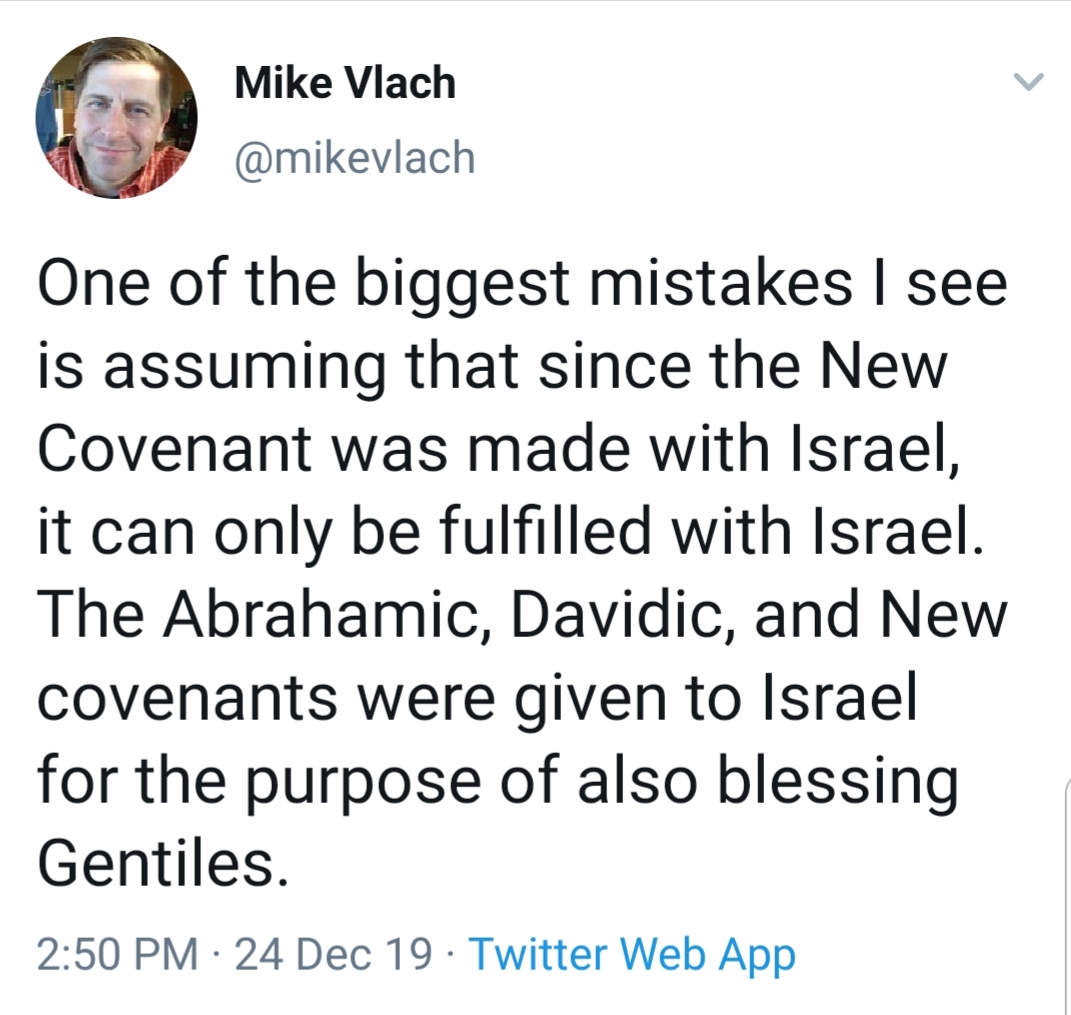
Tyler is a pastor in Olympia, WA and works in State government.
Featured Resource


Discussion