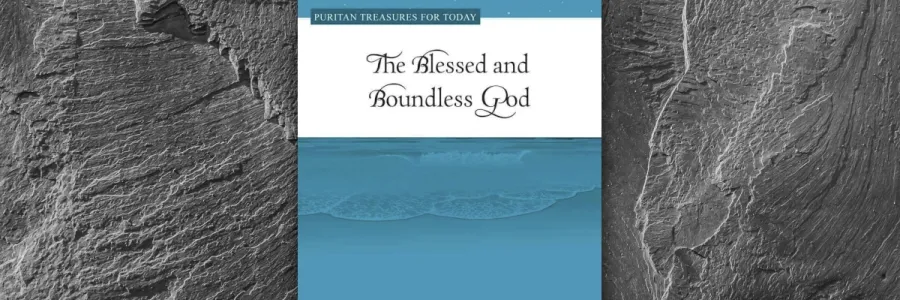
It is a bit of a stretch to call John Boys (1571-1625) a Puritan. He was an Anglican cleric who was Dean of Canterbury Cathedral and a translator of the Authorized (King James) Version of the Bible of 1611. He was certainly evangelical in his sympathies and was held in high esteem by his contemporaries.
Start Here: Reading Charles H. Spurgeon — An Annotated Bibliography for Beginners
Body
“In less than 40 years, Spurgeon published approximately 150 books. His literary output was, in a word, prodigious. With such a vast literary catalogue, where does one even begin?” - TGC
Puritan Books Evaluated: Part 10 – The Works of Hugh Binning
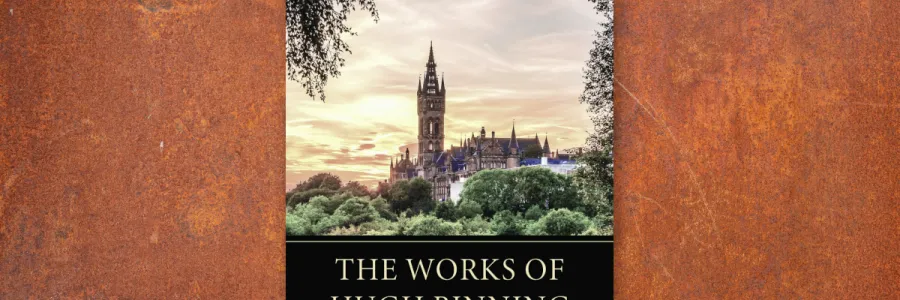
Binning was an astonishing fellow. He died at the age of 26. That’s right, 26! But a perusal of his literary remains shows a maturity of thought and a depth of theological acumen few could rival.
J. I. Packer, God’s Sovereignty, and the Importance of Knowing God
Body
“One of the greatest books I’ve ever read is J. I. Packer’s Knowing God. Knowing God came out in 1973, when Nanci and I were in our first year at Bible college. We read it right away. It was an instant classic.” - Randy Alcorn
Puritan Books Evaluated: Part 9 – Thomas Goodwin’s ‘The Vanity of Thoughts’

Read the series.
There are many people who are wary of buying a book by a Puritan author and getting stuck in the mud from a combination of old English and heady theology. An certainly, if I were to be asked to give an example of just such an author, I think I might serve up Thomas Goodwin as my “for instance.”
Puritan Books Evaluated: Part 8 – John Owen’s ‘Communion with God’

Read the series.
This review was written some years ago, but it fits well into the present project, so I decided to include it here. I hope I will be forgiven for posting a preexisting book review in the series, but the book is one of the most famous Puritan works and really had to be included. The review is of the recent edition of the work, John Owen, Communion with the Triune God, edited by Kelly M. Kapic and Justin Taylor, Wheaton, Ill: Crossway, 2007.