SHARPER IRON
“As iron sharpens iron, so one person sharpens another.” (Proverbs 27:17)
  • About
    • About Sharper Iron
    • Doctrinal Statement
    • Contact
    • Search
  • Forum
    • Forum Home
    • Comment Guidelines
    • Search
  • Account
    • Log in
    • Register

Angelology

The Satan Hypothesis: Is Satan responsible for natural disasters and animal suffering?

By Filings on Thu, 04/20/23
Body

“For the [Satan Hypothesis] to work, Satan and his demons must freely alter the physical realm using their own intrinsic powers supplied at their creative inception. In other words, they must be able to ‘push’ physical things around, without requiring God’s direct authority and supernatural power.” - Ken Coulson

Snake or Seraph? The Identity of the Serpent in Genesis 3 (Part 2)

By Bob Gonzales on Fri, 09/18/20

Read Part 1.

Perhaps what Adam and Even saw and heard in the Garden was no mere snake but a serpent-like creature belonging to a higher order than the ordinary “beasts of the field.” Several considerations lend support to this view.

Snake or Seraph? The Identity of the Serpent in Genesis 3 (Part 1)

By Bob Gonzales on Thu, 09/17/20

Genesis 3:1 introduces a new character into the Eden narrative and signals a shift in the plot. He is introduced as “the serpent.” Initially, the reader may picture nothing more than a legless reptile (suborder: serpentes). The Hebrew term נחש is generally used to refer to a type of a reptile, usually a legless reptile such as a snake (Num 21:6; Deut 8:15; Ps 58:4; Prov 23:32; Isa 65:25; Jer 8:17; Amos 5:19; Mic 7:17). But additional information in the account suggests that this entity is more than a mere snake. This creature talks with the humans and entices them to sin (3:1–5). As a result, he and his “offspring” are cursed by God (3:14–15).

The Angel of the Bottomless Pit: Challenging Our Comfortable Worldview, Part 4

By Paul Henebury on Thu, 09/10/20

Read the series.

I’ve said quite a lot about already about the angel of the bottomless pit, but I’ve not finished. I believe certain passages of Scripture act as hermeneutical touchstones. Decisions about what direction to take can be either determinative of where the exposition is going to go, or they highlight the assumptions brought to the text. One thinks of the Olive Tree metaphor in Romans 11, or the exhortation given to Ezekiel in Ezekiel 43. The first eleven verses of Revelation 9 are like that. They ask the interpreter, “Are you going to hold your nerve?”

The Angel of the Bottomless Pit: Challenging Our Comfortable Worldview, Part 3

By Paul Henebury on Tue, 08/25/20

Read Part 1 and Part 2.

The Angel and the Beast

We are now in a position to look at the angel of the bottomless pit. Here is the principal (some say only) verse referring to him:

And they had as king over them the angel of the bottomless pit, whose name in Hebrewis Abaddon, but in Greek he has the name Apollyon. (Rev. 9:11)

The Angel of the Bottomless Pit: Challenging Our Comfortable Worldview, Part 2

By Paul Henebury on Tue, 08/18/20

Read Part 1.

4. The smoke from the pit darkens an already darkened sun.

When I say “an already darkened sun” I do so because of Revelation 8:12:

Then the fourth angel sounded: And a third of the sun was struck, a third of the moon, and a third of the stars, so that a third of them were darkened. A third of the day did not shine, and likewise the night.

The Angel of the Bottomless Pit: Challenging Our Comfortable Worldview

By Paul Henebury on Mon, 08/03/20

There are some Bible passages that pose peculiar challenges to interpreters. These passages confront us with revelations of weirdness. We are faced with accepting and exploring this weird side of Scripture, or else with smoothing it over, perhaps by not actually dealing with it, but instead just pretending it is obscure, and on that basis, moving on. Episodes that qualify to be on the list of weird passages would include Genesis 6:1-4 and Joshua 10:11-14, but many could be added.

Certainly one of the strangest of these strange texts concerns the opening of the bottomless pit and “the angel of the bottomless pit” in Revelation 9. Here is how the passage opens:

Demon Fight'n - Part 3: The Weapon and the Battle

By Wyatt Graham on Wed, 08/01/12

Read Parts 1 and 2.

Continuing the series on demon-battling, we consider the believer’s divine weapon.

As stated earlier, the battle against Satan is primarily a defensive one,1 yet there is an avenue for the Christian to attack. However, as Chuck Lowe cautions, “There is a battle to be fought, but our role is neither to win some spectacular victory, nor even to launch an all-out offensive. Our function is primarily, if not exclusively, defensive.”2

Paul exhorts the Ephesians, who have put on their armor, to take up “the helmet of salvation, and the sword of the Spirit, which is the word of God” (Eph. 6:17). These last two instruments of war constitute the final piece of the warriors equipment (i.e. the helm) and the offensive weapon. The sword spoken of here is a short sword, much like a dagger which was used to strike hard and fast at close range.3 The picture Paul paints is one where the battle is fought at close range with viciousness.

However, the battle is not ours to fight. Paul informs the saints of two offensive plans of attack. In both plans, God is the primary actor in the battle. First, they attack with the sword, which is God’s word and contains all his promises. Second, they attack by praying at all times in the Spirit. As Christians, we have the impenetrable armor of God and divine weapons of war.

This whole passage sounds off on a triumphal note. There is no hint that the believer who has put on the new man (Eph. 4:24) and is controlled by God’s spirit (Eph. 5:18) has to be anxious about Satan or demons controlling, or in someway taking them over.


Demon Fight'n, Part 2: Divine Reconnaissance, Divine Armor

By Wyatt Graham on Tue, 07/24/12

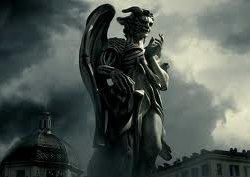
Demon SculptureReposted, with permission, from Grahams of Montrose. Read Part One.

Having introduced this series as a guide to staving off those pesky demons, we continue by noting the divine reconnaissance we have from Ephesians 6:11-13.

It may be surprising to note that the first thing Paul explains in Ephesians 6 is that we are at war. It is dangerous to enter into combat without knowing the enemy, but God reveals everything that we need to know about the enemy in Scripture. The Apostle Paul begins his explanation of Spiritual warfare by giving a command to put on the full armor of God (Eph. 6:11, 13). Verses 11-12 give the warrant for this command. The reason we need to put on God’s armor is because we are in a war with Satan and demonic powers whether we acknowledge it or not.

The Devil is chief among the demonic powers in the universe (Eph. 6:11). He is described in Scripture as the ruler of the world (John 12:31, 14:30, 16:11). “[T]he whole world lies in the power of the evil one,” notes the apostle John (1 John 5:19). He rules over the domain of darkness (Col. 1:13), being the prince of the power of the air (Eph 2:2). In the beginning, he led a rebellion in heaven, taking with him one-third of the angelic beings God had created (Rev. 12:4, 7-10). At the end of the rebellion he was cast down to earth (cf. Luke 10:17-18). Like the angels who fell with him, Satan deceived the human race so that the human race would follow him in rebellion (Gen 3). Now, he runs like a roaring lion to destroy God’s people (1 Pet 5:9; cf. Job 1-2). Because of this, it is reasonable to conclude that Satan is a powerful being who garners respect and authority over the fallen angels.

Demon Fight'n - Part 1

By Wyatt Graham on Thu, 07/19/12

Demon SculptureReposted, with permission, from Grahams of Montrose.

Satan exists and his aim is to attack Christians. Satan is the chief of demons. He is identified as the serpent of old, Satan (cf. Rev 12:9) who deceived Adam and Eve so that they took and ate from the tree of the knowledge of good and evil (Gen 3). Just as he deceived our first parents, he continues to deceive men today. Jesus told the religious leaders of his day, “You are of your father the devil, and your will is to do your father’s desires. He was a murderer from the beginning, and has nothing to do with the truth, because there is no truth in him. When he lies, he speaks out of his own character, for he is a liar and the father of lies” (John 8:44). Satan is a murderer, a deceiver, and behind false religion.

Demons are fallen angels and share the same purpose as Satan, to attack and control men of the world for evil purposes. That this is true is illustrated by Jesus’ ministry of casting out demons (cf. Matt 8:16). Demons can control people against their desires (Matt 8:28-34) and even cause physical handicaps (Matt 9:32-33). These are only a selection of the many things demons can do in the world.

Pagination

  • First page
  • Previous page
  • Page 1
  • Current page 2
Image
Image of file drawer

Footer

  • About
  • Contact
  • Search
  • Forum

Since 2005

Image
2005 SI Logo Image