Many people have maybe heard of what is called presuppositional apologetics but have little idea what it actually is. This situation is made worse because some defenders of the Faith are labeled presuppositional but, in fact, aren’t. So how should I describe it?
The first thing I would say is that although I personally have few problems with it, “presuppositionalism” is not perhaps the best name for the approach. A more preferable title would be something like “theological apologetics.”
Nevertheless, we are stuck with the name so we better understand what we mean by it. In this approach a “presupposition” is not just a prior assumption which one brings to a problem. It is not, e.g., supposing that the Bible is God’s Word and seeing where that gets you. This only makes your presupposition a “hypothetical,” not a necessary stance. But a “presupposition” here means an “ultimate heart commitment” to some interpretation and explanation of reality.
Cornelius Van Til, the father of this kind of apologetics, was very clear about this: he constantly stressed that, in opposition to the world, Biblical Christianity offered the only foundation upon which man could truly engage any question at all. Thus, for Van Til, God’s revelation in Scripture tells us how things really are. Things are the way God has made them and operates them, even though the world is fallen and cursed. Things are how God’s Word depicts them.
When we operate in accordance with this revelation, whether in doing science or in communicating to one another, or, indeed, in any of our thinking, we encounter Truth, whose Source is God. To the degree that we diverge from the Biblical Worldview we fall into “untruth.”
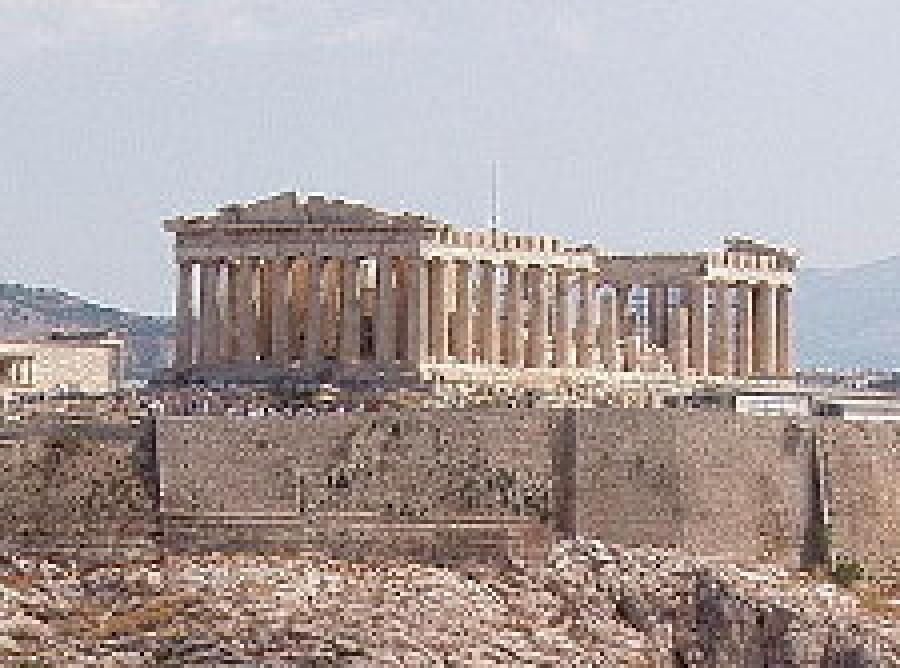
To provide a concrete example: the atheist Christopher Hitchens often cited the beauty of the Parthenon to show how the pagan Greeks before Christ didn’t need Christianity to construct such marvels. How would a presuppositionalist respond? He could respond any number of ways. He could simply say that accepting Hitchens’ claim does not affect the argument about the truth of Christianity one way or another. This would be to offer a true yet superficial response. If he wanted to dull the rhetorical impact of the statement, the presuppositionalist might point out that Biblical Christianity is the only worldview position which,
- Explains why the Greeks had the latent abilities to build the Parthenon (i.e. their mathematical, engineering and artistic skill).
- Explains why we find the Parthenon so beautiful (because humans have been given an aesthetic sense not found in animals).
- Explains why the Greeks built the Parthenon to a false deity (because of the Fall).
Thus, the apologist might say, “If Christianity were not true there could be no explanation for the Parthenon!”
Naturally the unbeliever would want to object to this statement strongly. But the presuppositionalist has now got him on his ground. When challenged to give a rational account of man’s scientific, artistic, or moral attainments on the basis of their ultimate commitment (or “presupposition”) to a mindless purposeless amoral universe, the best Hitchens and his ilk will do is to say, “I don’t have to account for it. It’s there isn’t it?” To which the apologist could reply. “Yes, it’s there because that’s how God created us. Those Greeks were made in God’s rational image and were given minds which could calculate and reason and appreciate beauty and then reproduce their non-physical plans in the physical world. Only the Bible provides a worldview by which to account for this—as well as accounting for why they built it and put an idol inside it.” And further, the presuppositionalist could press Hitchens by challenging him to explain how his worldview produces logic, numbers, art, science, morality, and every other concept he uses to attack Christian Truth. He won’t be able to! Why? Because his unbelieving interpretation of the world (which, of course, is also explained in Scripture) does not accord with the way reality actually is!
The Christian apologist would then outline the Biblical Worldview to show the unbeliever how it accounts for all the concepts he has been misusing to rebel against his Creator. From there it is a short step to the Cross! Christ died not only to save us from our sins, but to save our intellects from dreaming up unsatisfactory and idolatrous interpretations of ourselves and our world.
There is more to say, but this should suffice to explain the rudiments of presuppositional apologetics. By it the Christian can “bring every thought captive to Christ” (2 Cor. 10:5), without yielding one inch to the presuppositions of the ungodly who stand justly under the wrath of the God (Rom. 1:18) whom deep-down they know in their heart of hearts (Rom. 1:19-22; Jn. 3:19-21; Psa. 14:1).

Discussion
NewGood one Paul thanks. Looking
NewClears some things up
Yes. I hadn’t looked at “presupposition” in quite that sense before.
Views expressed are always my own and not my employer's, my church's, my family's, my neighbors', or my pets'. The house plants have authorized me to speak for them, however, and they always agree with me.