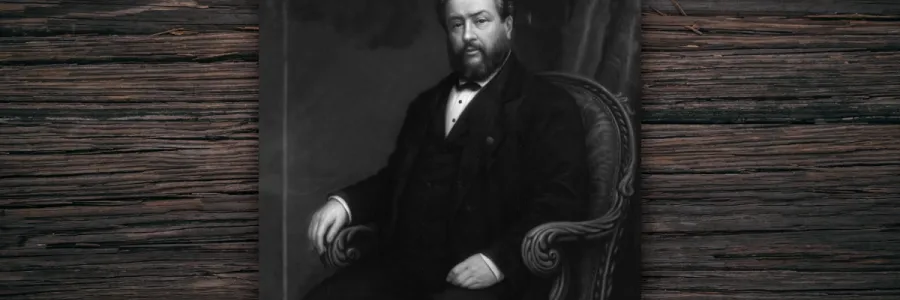
C. H. Spurgeon

The First Christmas Carol

A sermon (No. 168) delivered on December 20, 1857 by C. H. Spurgeon at the Music Hall, Royal Surrey Gardens.

“Glory to God in the highest, and on earth peace, good will toward men” (Luke 2:14).

It is superstitious to worship angels; it is but proper to love them. Although it would be a high sin, and an act of misdemeanor against the Sovereign Court of Heaven to pay the slightest adoration to the mightiest angel, yet it would be unkind and unseemly, if we did not give to holy angels a place in our heart’s warmest love. In fact, he that contemplates the character of angels, and marks their many deeds of sympathy with men, and kindness towards them, cannot resist the impulse of his nature—the impulse of love towards them. The one incident in angelic history, to which our text refers, is enough to weld our hearts to them for ever. How free from envy the angels were! Christ did not come from heaven to save their compeers when they fell. When Satan, the mighty angel, dragged with him a third part of the stars of heaven, Christ did not stoop from his throne to die for them; but he left them to be reserved in chains and darkness until the last great day. Yet angels did not envy men. Though they remembered that he took not up angels, yet they did not murmur when he took up the seed of Abraham; and though the blessed Master had never condescended to take the angel’s form, they did not think it beneath them to express their joy when they found him arrayed in the body of an infant. How free, too, they were from pride! They were not ashamed to come and tell the news to humble shepherds. Methinks they had as much joy in pouring out their songs that night before the shepherds, who were watching with their flocks, as they would have had if they had been commanded by their Master to sing their hymn in the halls of Caesar. Mere men—men possessed with pride, think it a fine thing to preach before kings and princes; and think it great condescension now and then to have to minister to the humble crowd. Not so the angels. They stretched their willing wings, and gladly sped from their bright seats above, to tell the shepherds on the plain by night, the marvelous story of an Incarnate God. And mark how well they told the story, and surely you will love them! Not with the stammering tongue of him that tells a tale in which he hath no interest; nor even with the feigned interest of a man that would move the passions of others, when he feeleth no emotion himself; but with joy and gladness, such as angels only can know. They sang the story out, for they could not stay to tell it in heavy prose. They sang, “Glory to God on high, and on earth peace, good will towards men.” Methinks they sang it with gladness in their eyes; with their hearts burning with love, and with breasts as full of joy as if the good news to man had been good news to themselves. And, verily, it was good news to them, for the heart of sympathy makes good news to others, good news to itself. Do you not love the angels? Ye will not bow before them, and there ye are right; but will ye not love them? Doth it not make one part of your anticipation of heaven, that in heaven you shall dwell with the holy angels, as well as with the spirits of the just made perfect? Oh, how sweet to think that these holy and lovely beings are our guardians every hour! They keep watch and ward about us, both in the burning noon-tide, and in the darkness of the night. They keep us in all our ways; they bear us up in their hands, lest at any time we dash our feet against stones. They unceasingly minister unto us who are the heirs of salvation; both by day and night they are our watchers and our guardians, for know ye not, that “the angel of the Lord encampeth round about them that fear him.”read more

Special Thanksgiving to the Father

Preached January 15th, 1860 by C. H. Spurgeon (1834-1892) 

Giving thanks unto the Father, which hath made us meet to be partakers of the inheritance of the saints in light: Who hath delivered us from the power of darkness, and hath translated us into the kingdom of his dear Son. (KJV, Colossians 1:12-13)

This passage is a mine of riches. I can anticipate the difficulty in preaching and the regret in concluding we shall experience this evening because we are not able to dig out all the gold which lies in this precious vein. We lack the power to grasp and the time to expatiate upon that volume of truths which is here condensed into a few short sentences.

We are exhorted to “give thanks unto the Father.” This counsel is at once needful and salutary. I think, my brethren, we scarcely need to be told to give thanks unto the Son. The remembrance of that bleeding body hanging upon the cross is ever present to our faith. The nails and the spear, his griefs, the anguish of his soul, and his sweat of agony, make ouch tender touching appeals to our gratitude—these will prevent us always from ceasing our songs, and sometimes fire our hearts with rekindling rapture in praise of the man Christ Jesus. Yes we will bless thee, dearest Lord; our souls are all on fire. As we survey the, wondrous cross, we cannot but shout—

O for this love let rocks and hills
Their lasting silence break,
And all harmonious human tongues
The Savior’s praises speak.read more

C. H. Spurgeon - Sermon for New Year's Day

Special thanks to The Spurgeon Archive. Spurgeon delivered this message on Thursday evening, January 1, 1885 at the Metropolitan Tabernacle, Newington.

“And he that sat upon the throne said, Behold, I make all things new.”—Revelation 21:5.

HOW PLEASED WE ARE with that which is new! Our children’s eyes sparkle when we talk of giving them a toy or a book which is called new; for our short-lived human nature loves that which has lately come, and is therefore like our own fleeting selves. In this respect, we are all children, for we eagerly demand the news of the day, and are all too apt to rush after the “many inventions” of the hour. The Athenians, who spent their time in telling and hearing some new thing, were by no means singular persons: novelty still fascinates the crowd. As the world’s poet says— read more

The Incarnation and Birth of Christ - C. H. Spurgeon

Delivered Sunday Morning, December 23rd, 1855, by the Rev. C.H. Spurgeon at New Park Street Chapel, Southwark.

“But thou, Beth-lehem Ephratah, though thou be little among the thousands of Judah, yet out of thee shall he come forth unto me that is to be ruler in Israel; whose goings forth have been from of old, from everlasting” (Micah 5:2).

This is the season of the year when, whether we wish it or not, we are compelled to think of the birth of Christ. I hold it to be one of the greatest absurdities under heaven to think that there is any religion in keeping Christmas-day. There are no probabilities whatever that our Saviour Jesus Christ was born on that day, and the observance of it is purely of Popish origin; doubtless those who are Catholics have a right to hallow it, but I do not see how consistent Protestants can account it in the least sacred. However, I wish there were ten or a dozen Christmas-days in the year; for there is work enough in the world, and a little more rest would not hurt labouring people. Christmas-day is really a boon to us; particularly as it enables us to assemble round the family hearth and meet our friends once more. Still, although we do not fall exactly in the track of other people, I see no harm in thinking of the incarnation and birth of the Lord Jesus. We do not wish to be classed with those read more